 Kids Learn With Concept
Almost every parent of a three-year-old starts in the same place: a notebook, a pencil, and the letter A. And almost every one of them ends up with the same frustrating half hour — a child who grips the pencil in a fist, presses too hard, and produces something that is not quite an A. Nothing is wrong with the child. The order is wrong. A child's hand has to learn lines before it can learn letters, and it has to learn holding before it can learn lines. Here is the order that works, and roughly how long each step takes.
Step 1 — Colours and shapes: teaching the hand to stop
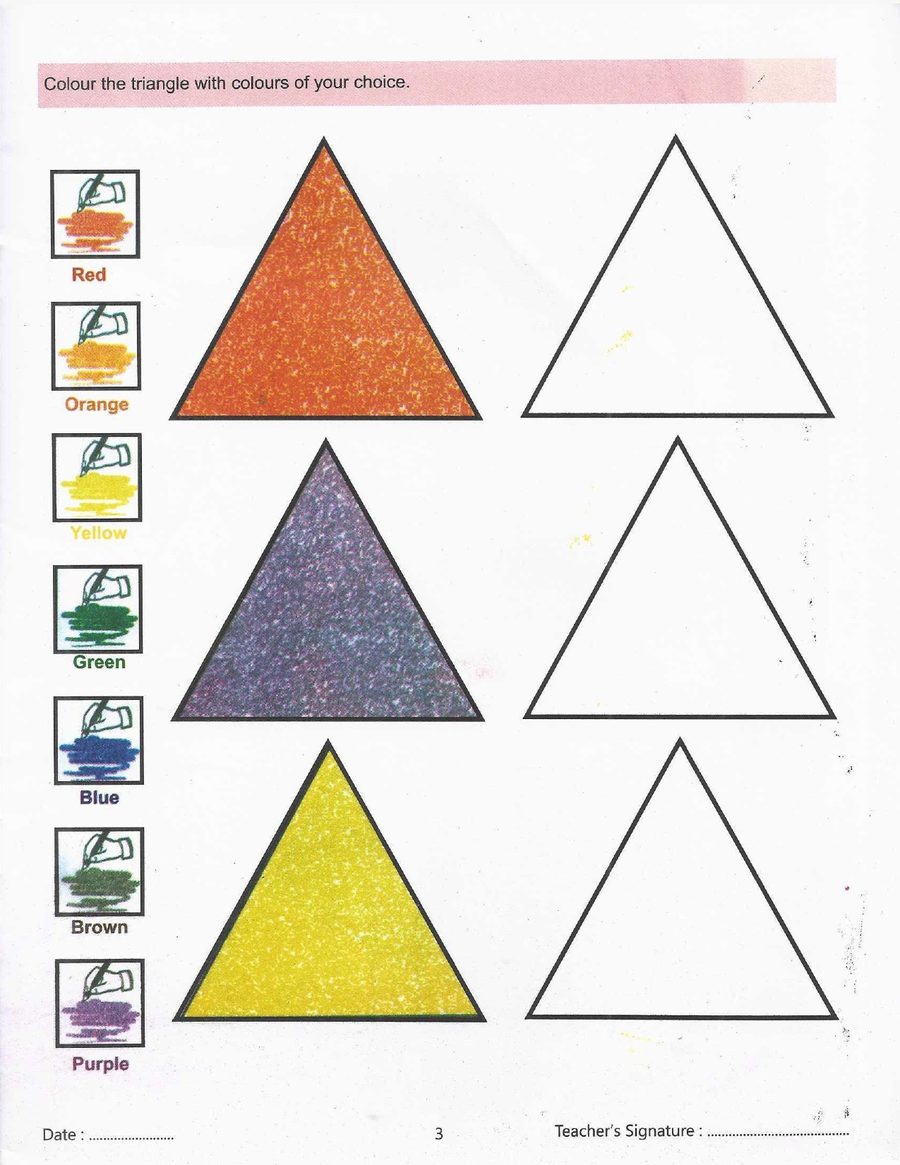
Before a child can write, the hand has to learn one surprisingly hard thing: stopping at a line. That is the whole point of colouring at this age. It is not decoration and it is not time-pass; it is the first fine-motor lesson, and every letter your child will ever write depends on it.
⭐ A child who can colour a triangle without crossing its edges is a child whose hand is ready to start tracing letters.
Work through it in this order, and do not hurry:
- Name the colours
- Colour big shapes
- Circle, square, triangle
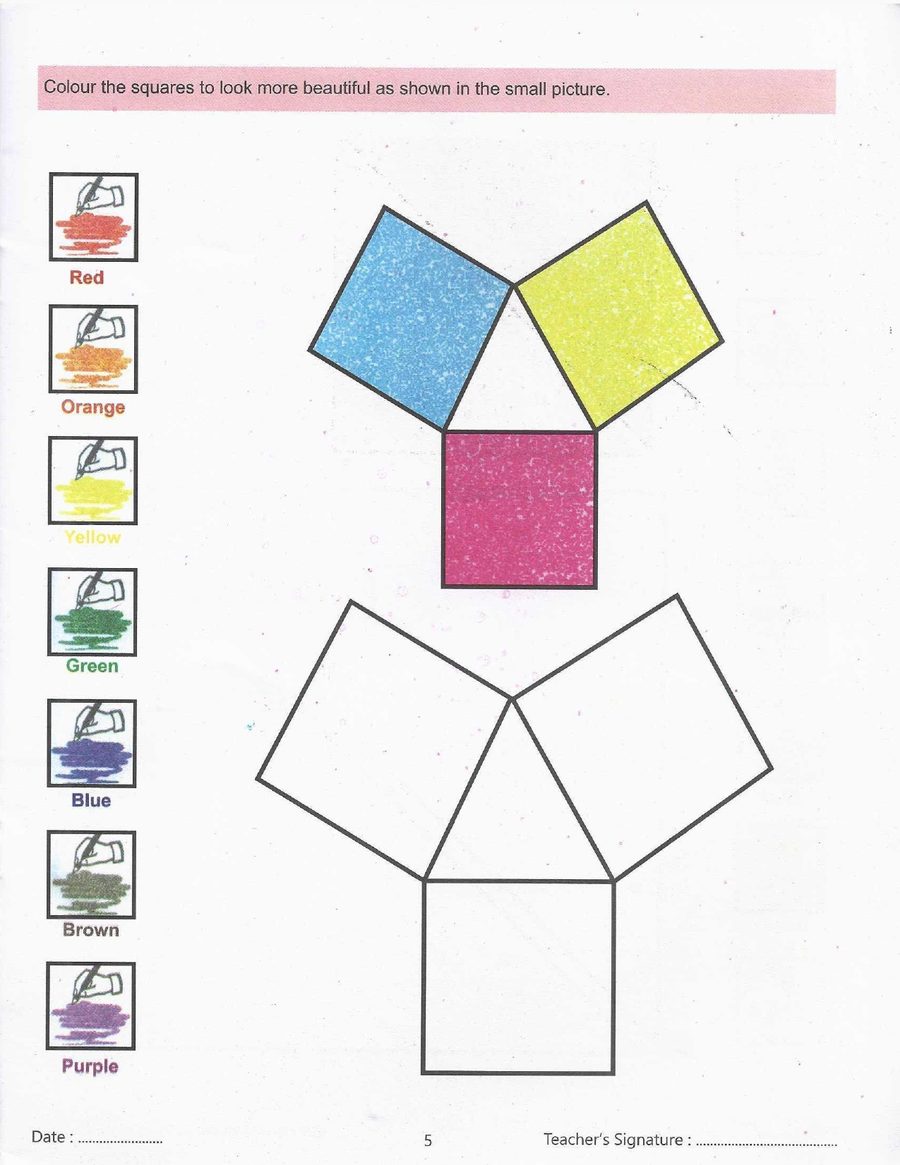
- Colour by instruction
- Patterns and matching
- Draw and colour
"Colour by instruction" is the one most people skip and the one that does the most work: colour the squares red, colour the circles blue. The child now has to hold two things in mind at once — the shape and the rule — which is exactly what a worksheet will ask of them for the next ten years.
Step 2 — Patterns: standing lines, sleeping lines, curves
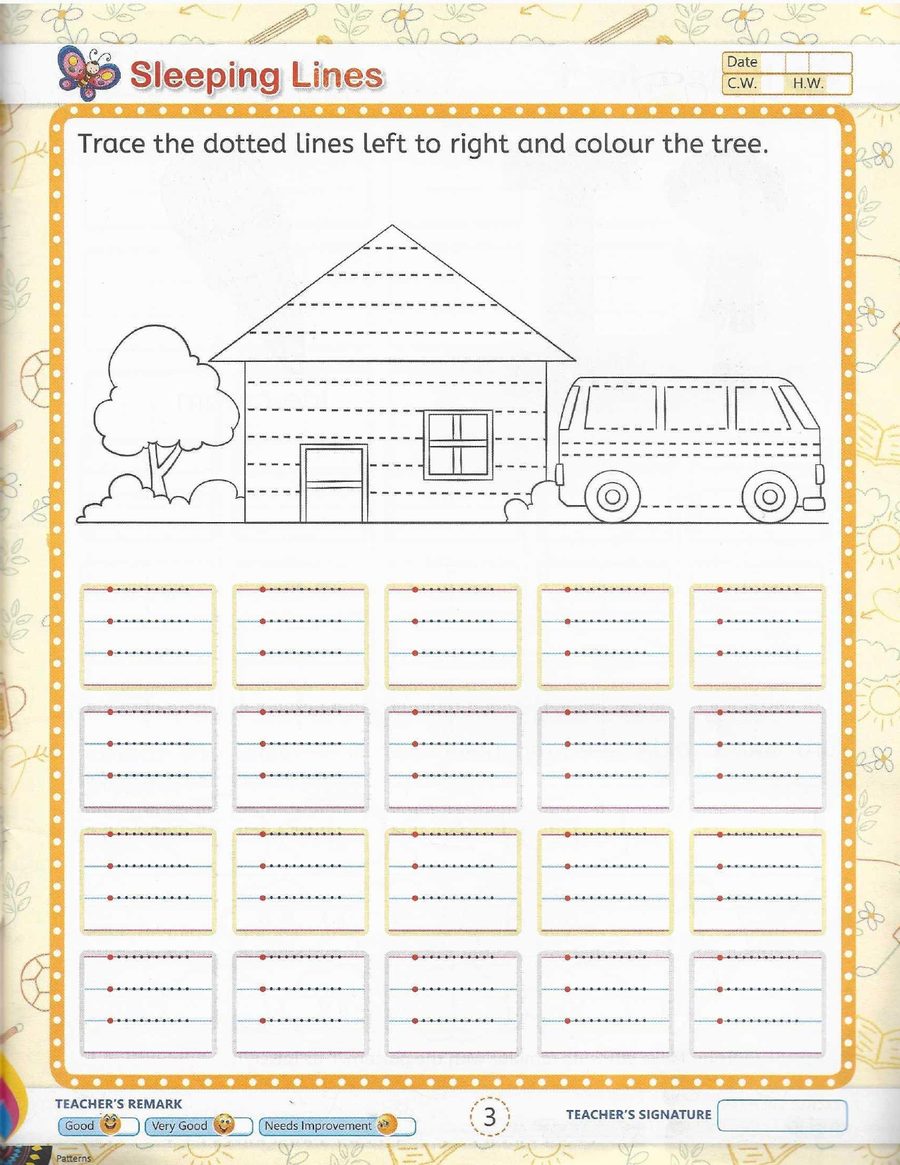
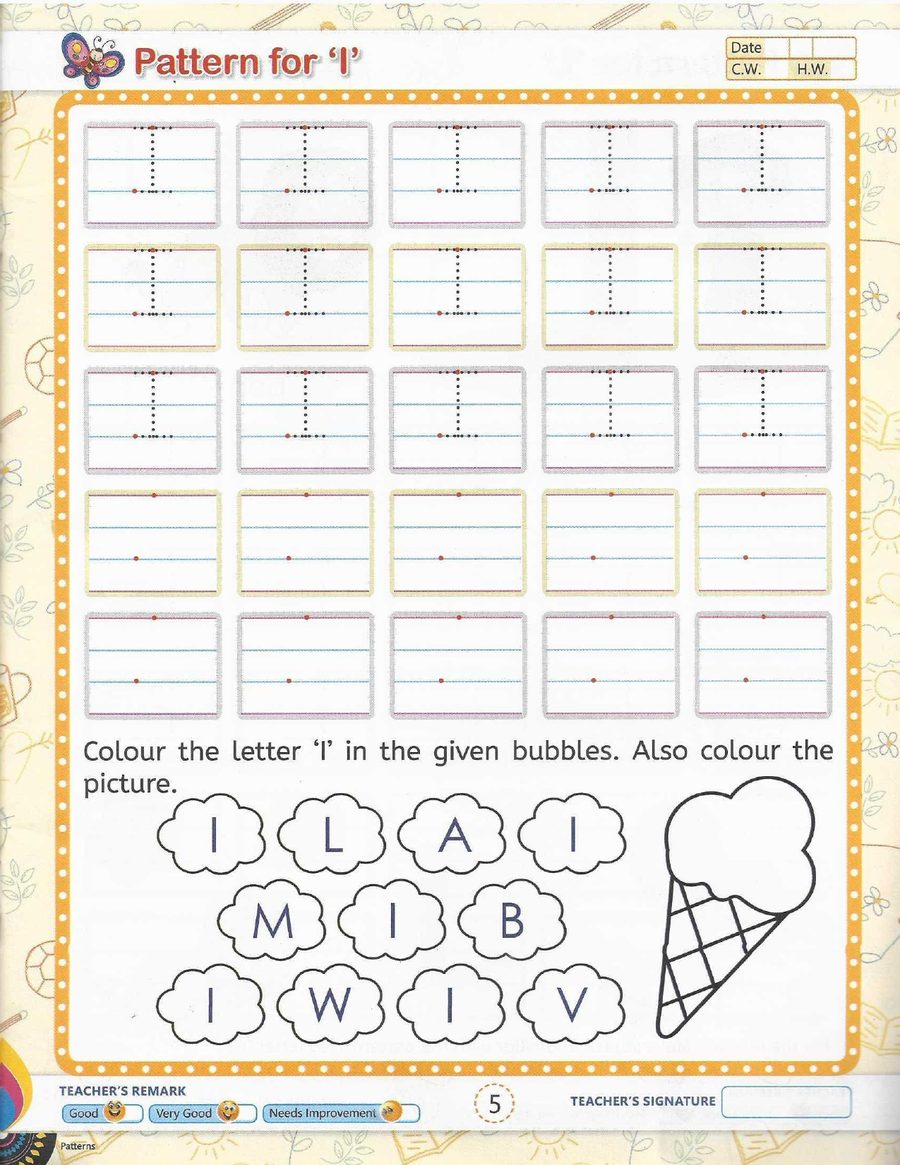
Every letter of the English alphabet is made of four strokes and nothing else:
| Stroke | What it is | Letters it builds |
|---|---|---|
| Standing line | Top to bottom, straight down | I, L, T, H, E, F |
| Sleeping line | Left to right, flat | T, L, E, F, Z |
| Slanting line | Diagonal, both directions | A, V, W, X, Y, K |
| Curve | Half circles and full circles | C, O, S, G, B, D, P |
Give a child a page of standing lines to trace and they are, without knowing it, practising six letters at once. This is why pattern pages come before letter pages. Spend two or three weeks here. The dotted-line pages with a picture to colour at the top work best, because the child finishes with something to show.
⭐ Do not move to letters until the child can trace a row of standing lines without the pencil wandering off the dots.
Step 3 — Letters A to Z, in four passes
A letter is not learned once. It is learned four times, in four different ways, and a good pre-nursery book will take a child through all four:
The four passes for every letter
- Trace — the pencil follows the dots and the arrow, so the hand learns the movement.
- Recognise — find and circle the letter among others (find every I among L, A, M, B, V).
- Sound — the beginning sound: A for apple, C for cat, E for elephant.
- Picture — match the letter to a picture, then colour it, so the letter attaches to a thing.
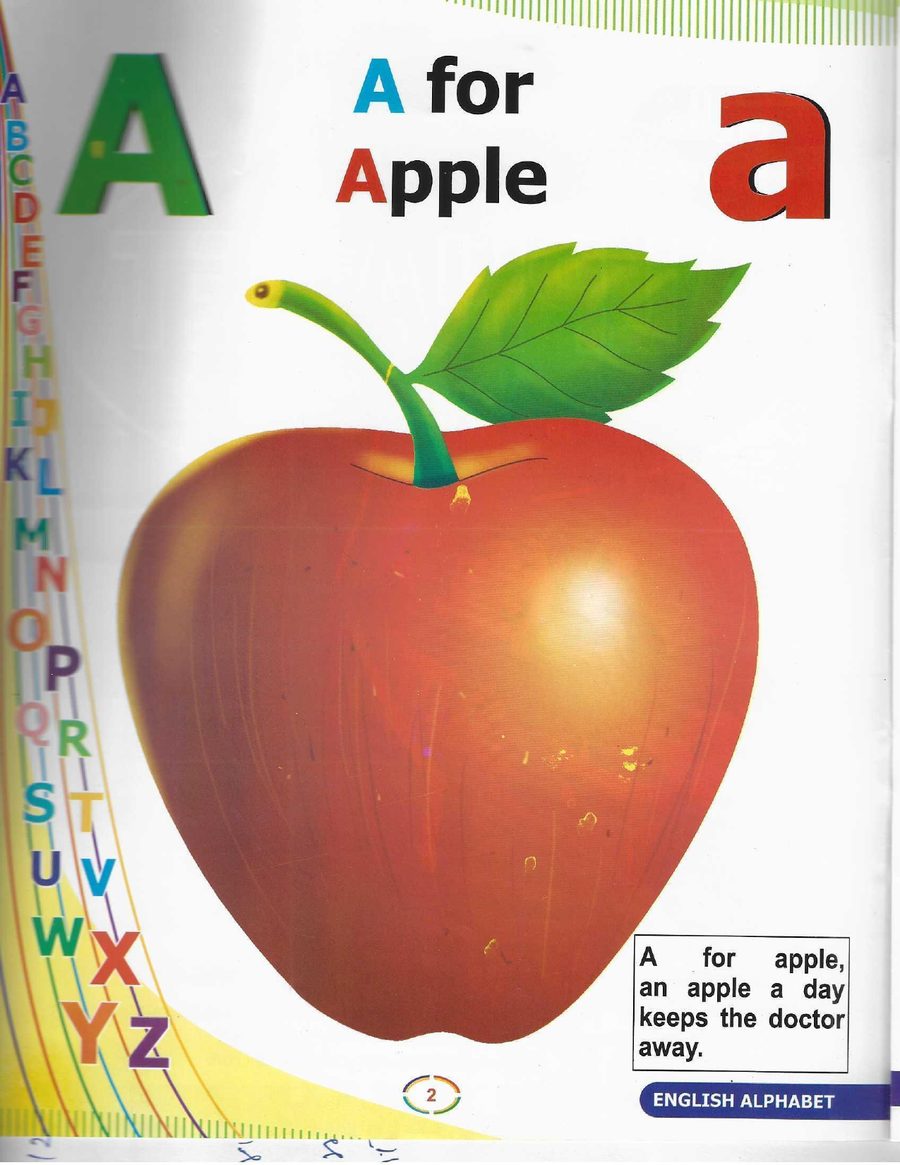
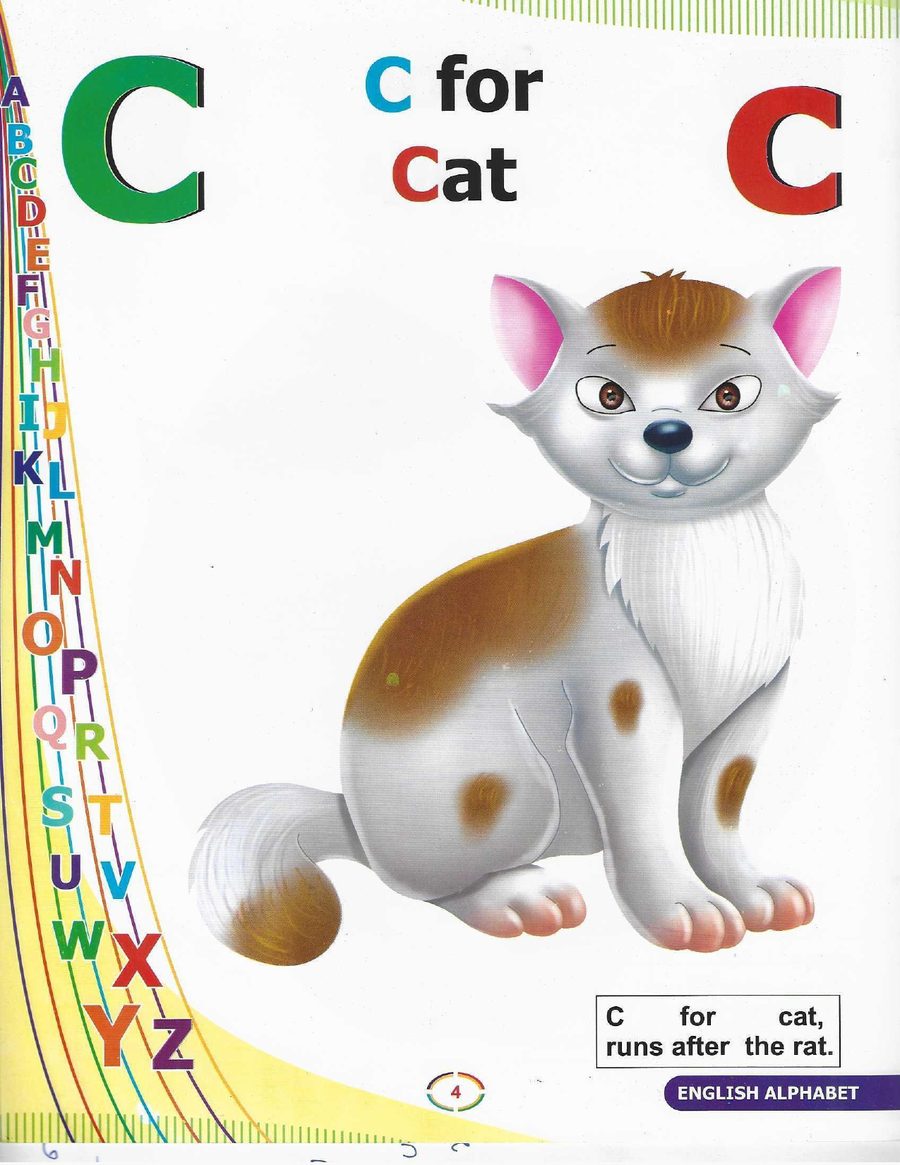
The fourth pass matters more than it looks. A three-year-old does not remember "A"; they remember the big red apple, and the letter comes attached to it. That is why alphabet picture books with one bold picture per page still beat any amount of copying — and why a one-line rhyme ("an apple a day keeps the doctor away") sticks when a rule would not.
Step 4 — Numbers 1 to 20, in the right order
Counting out loud is not the same as knowing a number, and most children can rattle off "one two three four five" long before they can hand you four buttons. The number sequence is:
| Order | Skill | What the child does |
|---|---|---|
| 1 | Count objects | Touch each object once while saying the number |
| 2 | Recognise the numeral | Point to the 4 among 1, 7, 4, 9 |
| 3 | Trace and write | Follow the dotted numeral, top to bottom |
| 4 | Missing numbers | Fill 1, 2, __, 4, __, 6 |
| 5 | What comes next | Continue the count without a prompt |
| 6 | Compare | Which group has more? Which has fewer? |
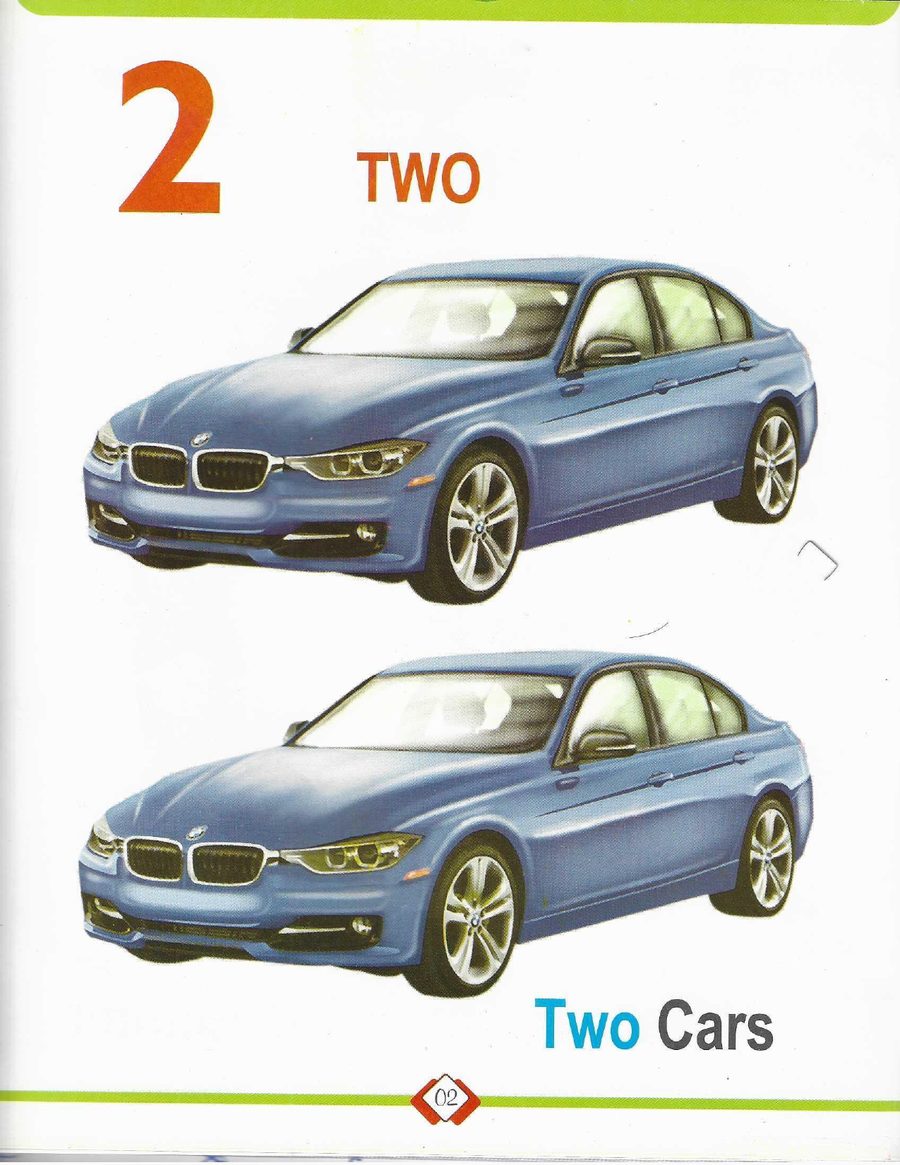
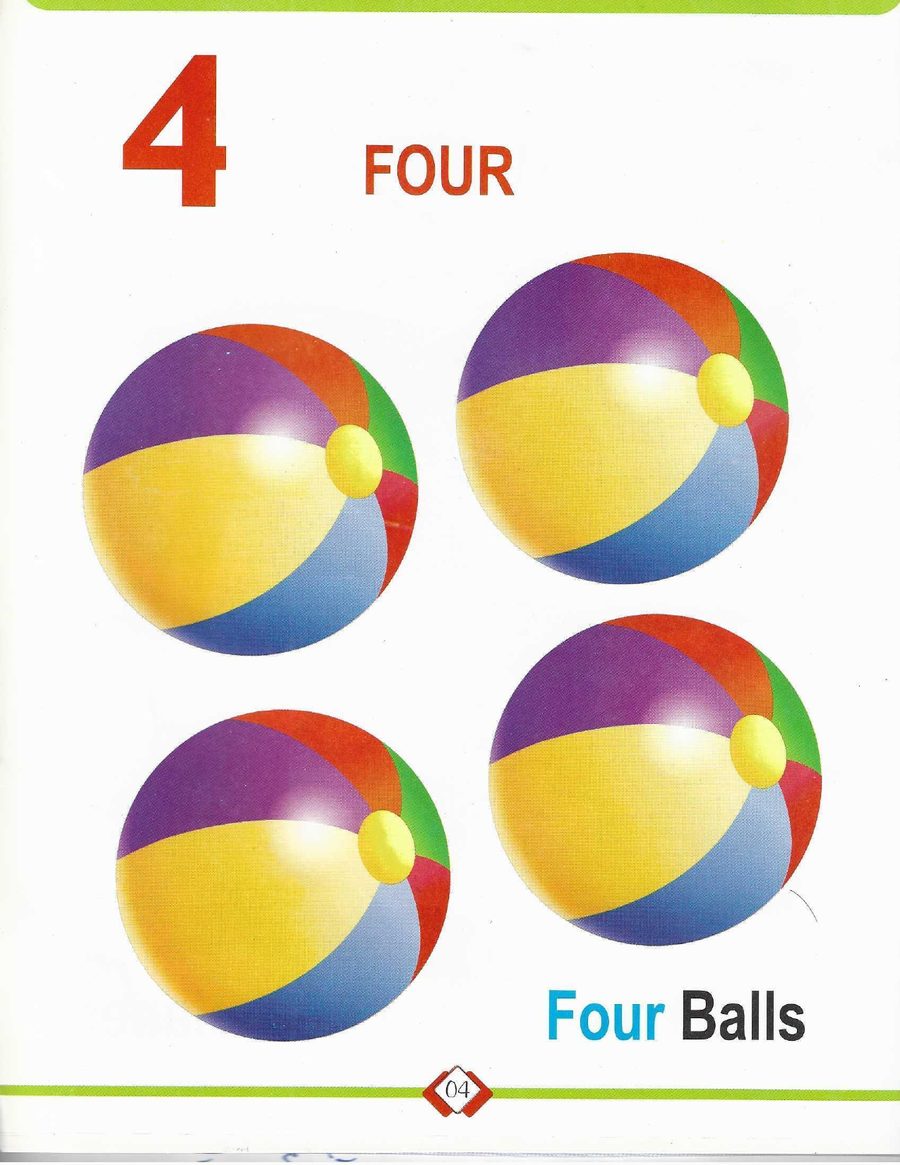
One to ten first, and properly, before eleven to twenty. A child who is solid to ten picks up the teens in days; a child who is shaky at seven will be shaky at seventeen.
A 15-minute routine that a three-year-old will sit through
Fifteen minutes. Not thirty. At this age the limit is attention, not ability, and a child who is stopped while they are still enjoying it comes back tomorrow willingly.
| Minutes | What you do |
|---|---|
| 0–3 | Say the colours, shapes and the letter of the day out loud together. No pencil yet. |
| 3–8 | One pattern or tracing page. Sit beside them; guide the hand for the first two only. |
| 8–12 | One number or letter recognition page — find, circle, match. |
| 12–15 | Colour the picture at the bottom of the page. This is the reward, so never skip it. |
⭐ Same time, same place, every day. The habit is worth more than the page.
Five things that slow a child down
Worth avoiding
- Starting with letters. The hand is not ready. Two weeks of pattern pages saves two months of bad letter shapes.
- A thin pencil. Small hands need a thick pencil or a chunky crayon to hold correctly.
- Correcting every stroke. Let them finish the row, then praise the best one and point at it. That is the correction.
- Racing to capital and small letters at once. Capitals first — they are made of straight lines.
- Skipping counting objects and going straight to writing numerals. The numeral means nothing until the quantity does.
What "ready for nursery" actually looks like
By the end of the pre-nursery year, a child who has been through this order can usually hold a pencil in three fingers, colour inside a large outline, trace all four stroke types, recognise most capital letters and say the beginning sound of a few, count objects to ten reliably, and write numerals to ten. That is the whole target. Anything beyond it is a bonus, and nothing below it is a failure — children arrive at these in their own months.
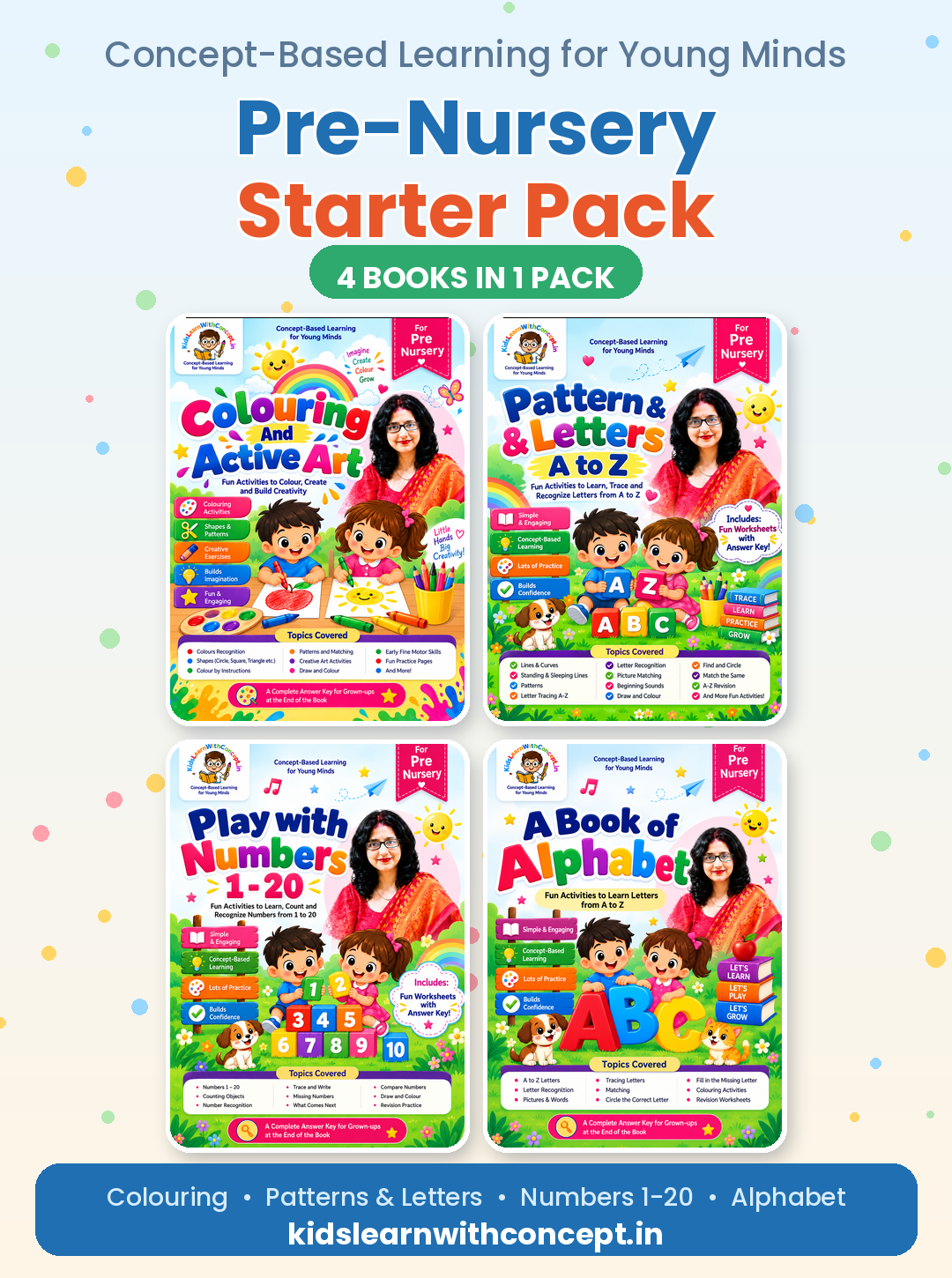
Pre-Nursery Starter Pack — 4 Books, 153 Pages
Each step above is a book. The four belong together, because a child works through them side by side during the same year — and the pack is ₹97 cheaper than buying them separately at ₹149 each:
- Colouring And Active Art — colours, shapes, patterns and matching, colour-by-instruction, draw and colour (34 pages).
- Pattern & Letters A to Z — standing, sleeping and slanting lines, curves, then letter tracing, recognition and beginning sounds (64 pages).
- Play with Numbers 1–20 — counting objects, number recognition, trace and write, missing numbers, comparing (25 pages).
- A Book of Alphabet — one big picture and one rhyme for every letter, A to Z (30 pages).
Instant download · Print at home and reuse forever · A complete answer key for grown-ups in every book · Written by educator Vandana Kumari (M.Sc, LL.B).