 Kids Learn With Concept
A child who scores full marks in school maths can still come out of their first olympiad paper looking shaken. Nothing has gone wrong: the two papers test different things. School maths asks can you do this sum? An olympiad asks can you work out which sum this is? Once you see that difference, preparing for it stops being mysterious. Here is what a Class 3 and Class 4 paper actually contains, and a six-week way to get ready for it.
How an olympiad question is different
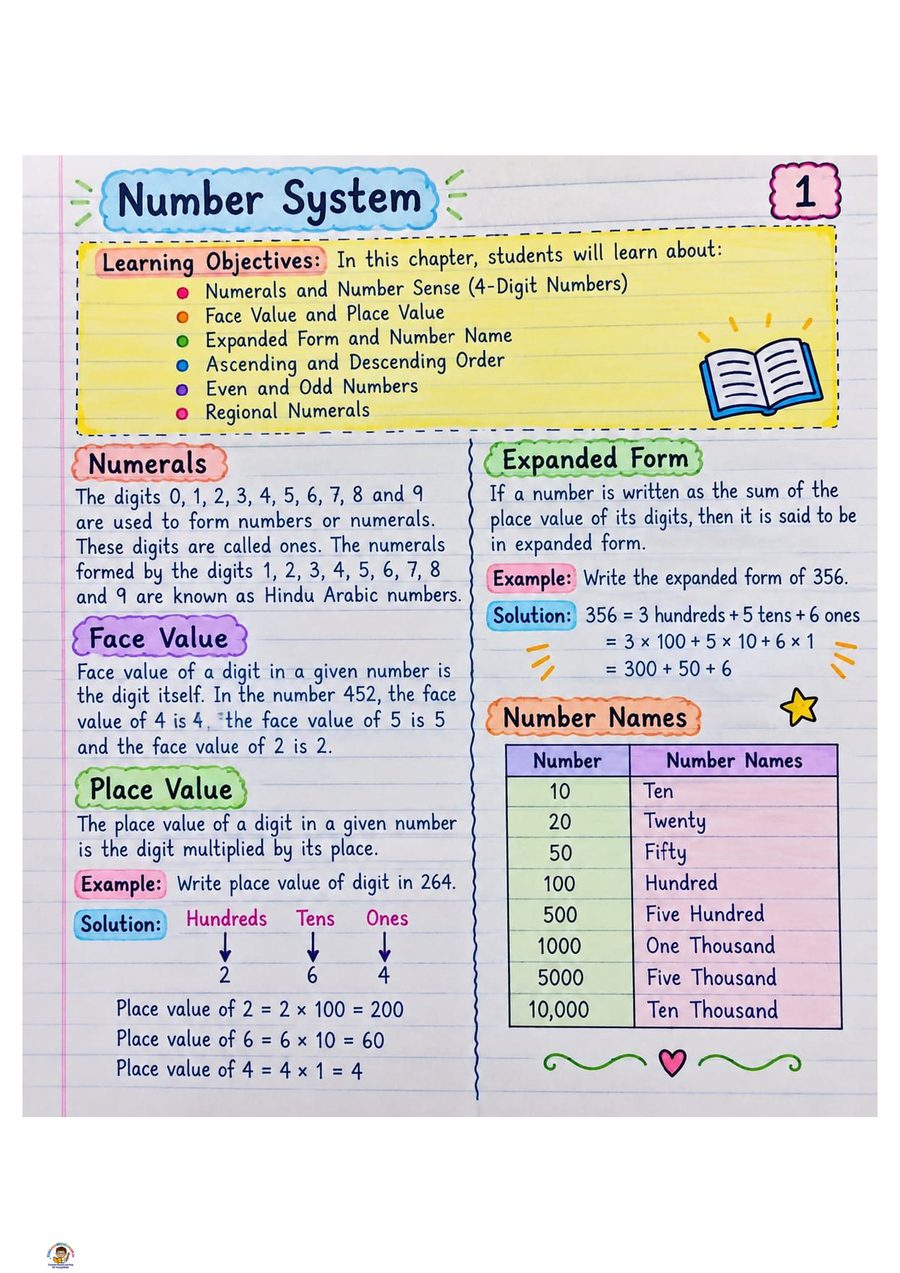
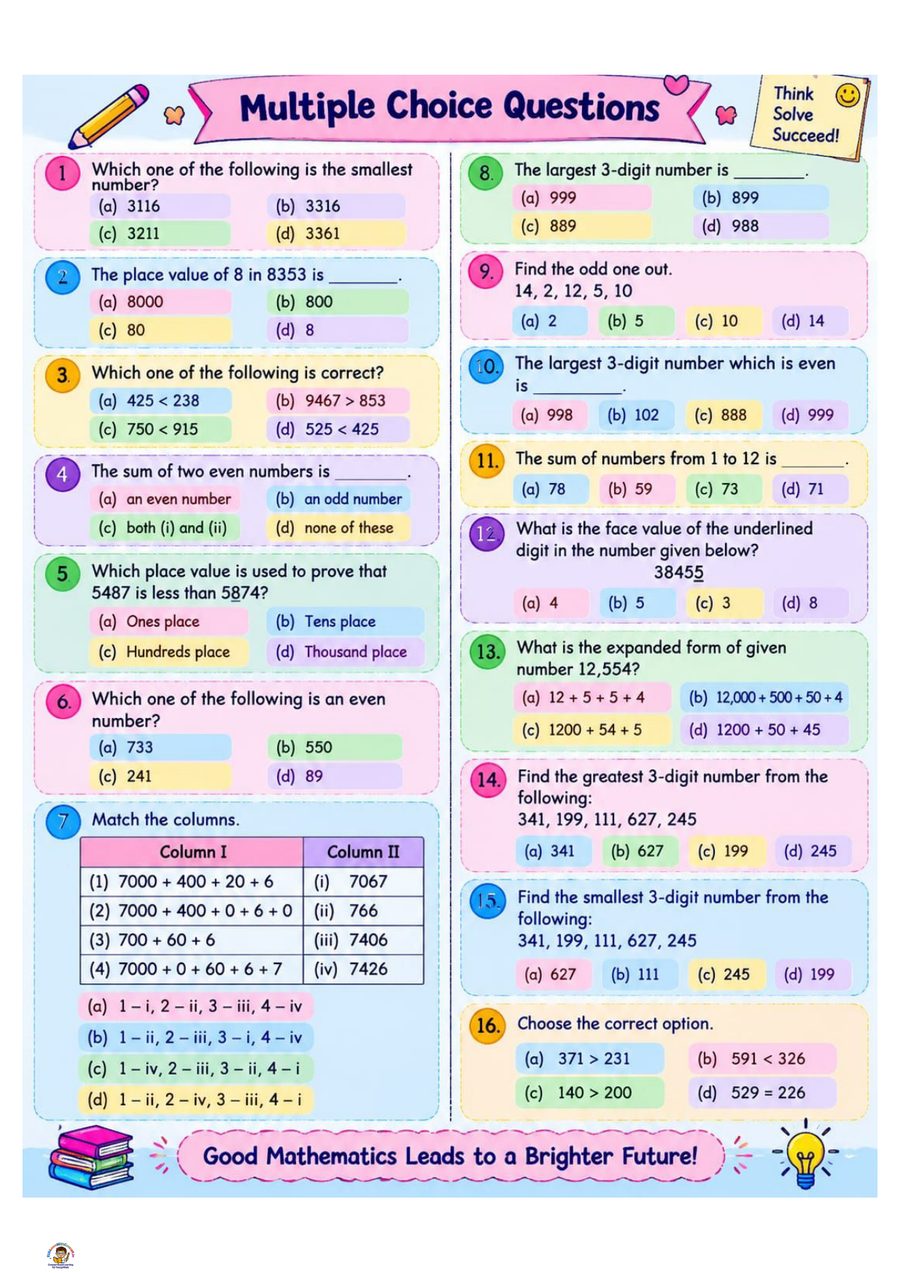
Take a plain school question: Find the place value of 2 in 264. One step, one answer. Now the olympiad version: Which place value is used to prove that 5487 is less than 5874? Same chapter, same knowledge — but the child has to compare two numbers, notice where they first differ, and name that place. It is one extra step of thinking, and that extra step is the entire exam.
⭐ Olympiad papers are almost never harder arithmetic. They are the same arithmetic, one layer of reasoning deeper.
Three things follow from that. Speed matters less than reading the question properly. Guessing between four options is a real skill and can be taught. And a child who has only ever been given sums — never problems — will need a few weeks to adjust, which is normal.
The syllabus, chapter by chapter
| Chapter | What is tested | A typical question |
|---|---|---|
| Number System | 4-digit numbers, face value and place value, expanded form, number names, ascending and descending order, even and odd, Roman numerals | Find the greatest 3-digit number from 341, 199, 111, 627, 245 |
| Computation Operations | Addition, subtraction, multiplication, division; matching columns; checking a result | 7000 + 400 + 20 + 6 equals which of these? |
| Fractions | Halves, quarters, thirds; shaded figures; comparing fractions | Which figure shows one half as the shaded fraction? |
| Measurement | Length, weight, capacity; money; time and the calendar; unit conversion | A jug holds 3 litres 200 ml. How many 400 ml glasses can be filled? |
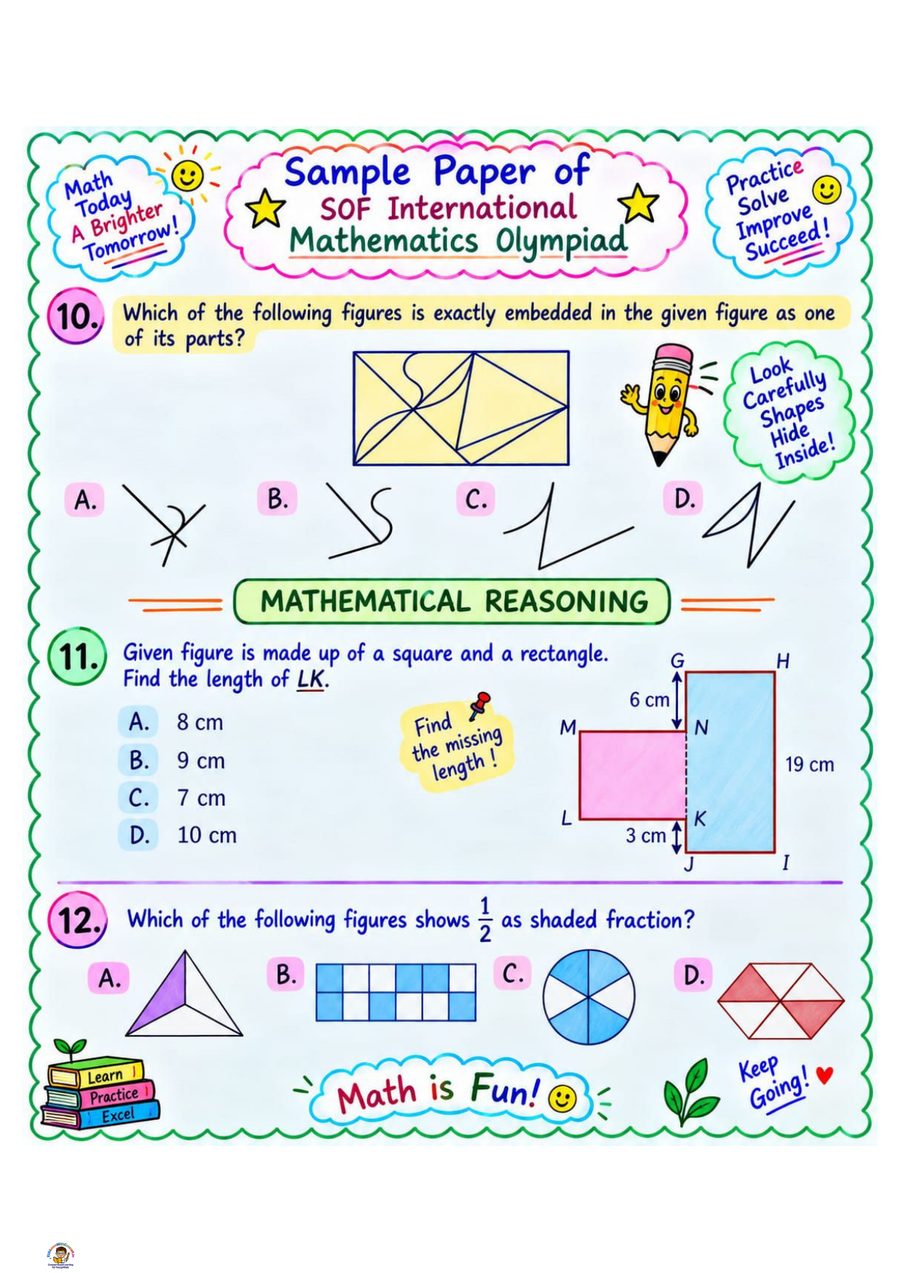
| Geometry | Shapes and their parts, embedded figures, symmetry, top and side views, missing lengths | Which figure is exactly embedded in the given figure as one of its parts? |
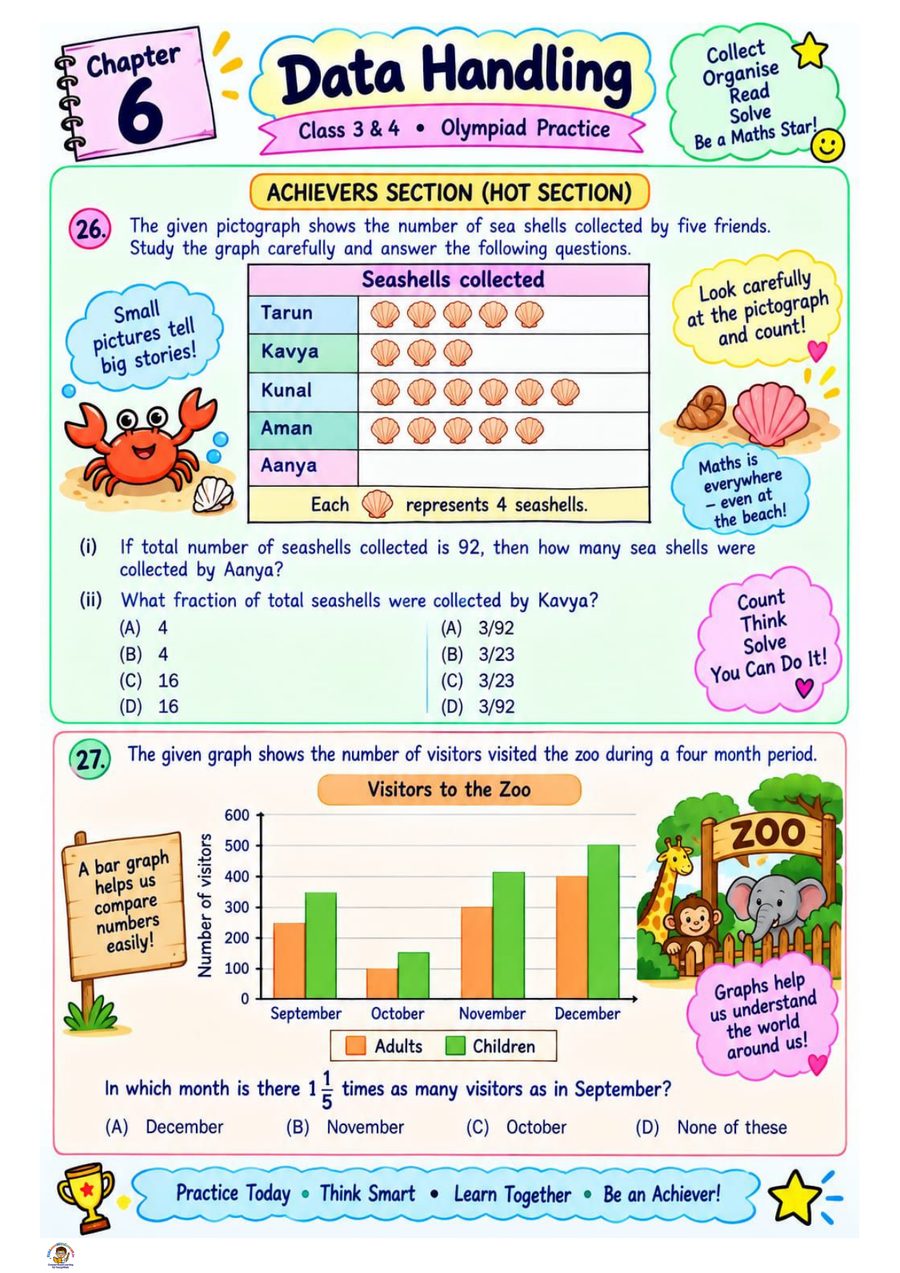
| Data Handling | Pictographs, bar graphs, tables, Venn diagrams | Each symbol represents 4 seashells — how many did Aasya collect? |
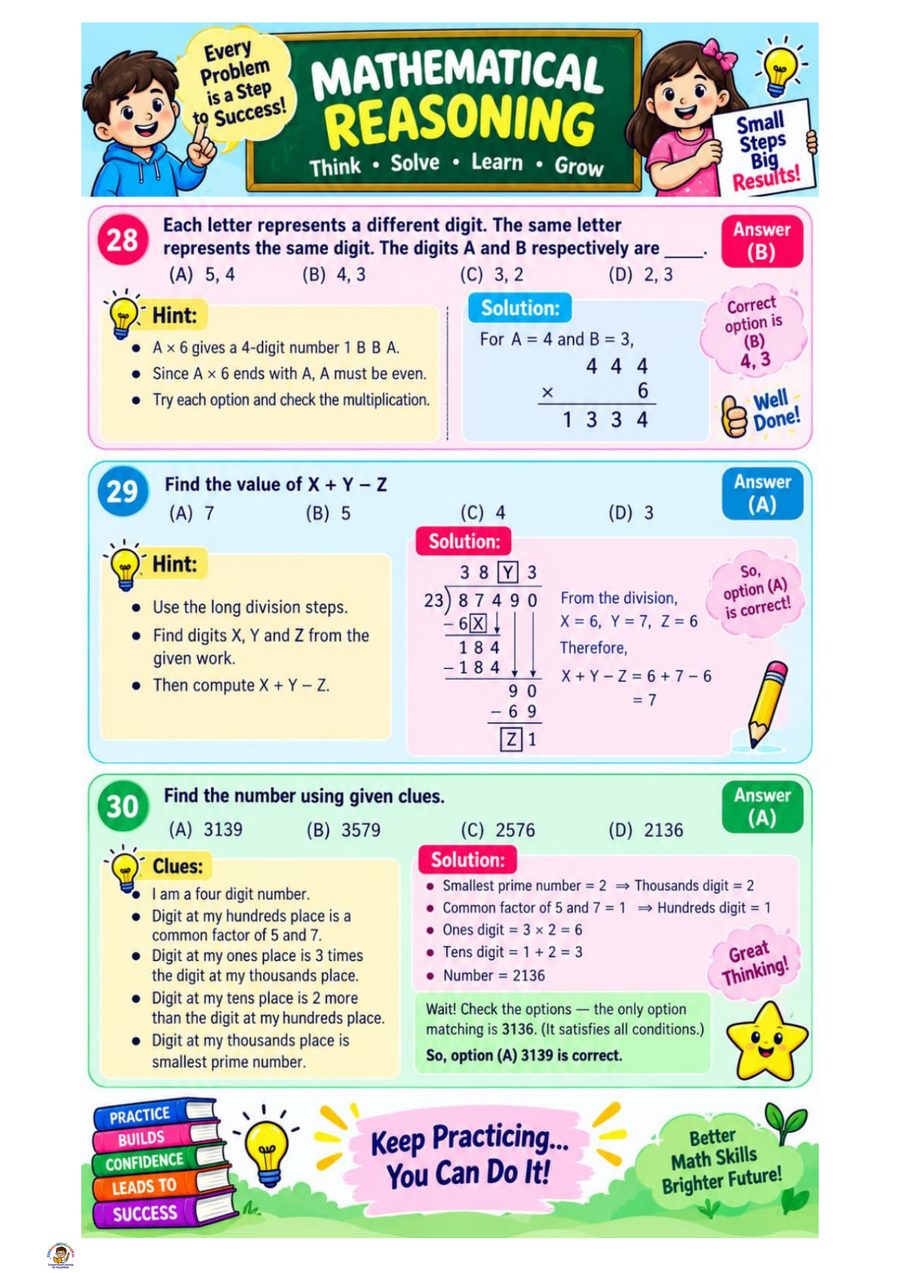
| Logical Reasoning | Patterns, series, coding, odd one out, letter-for-digit puzzles, clue problems | Each letter stands for a digit — find A and B |
| Mental Maths | Quick calculation, estimation, number sense without paper | The sum of all numbers from 1 to 12 is … |
| Everyday Maths | Money, shopping, sharing, real-life word problems | Cost of 1 shirt is Rs 145 and of 6 shirts is Rs 870 — according to the question … |
| Achievers (HOTS) | Two or three chapters combined in one question, higher weight per mark | Arrange the given odd numbers in ascending order, then find the required difference |
The Achievers section, and why it decides the rank
Most olympiad papers end with a short, high-value section — often called Achievers or HOTS. The questions there carry more marks each and usually combine two chapters: a geometry figure whose answer needs a fraction, or a data table whose answer needs a multiplication. Children lose ranks here, not in the first thirty questions.
The fix is not more practice of the same kind. It is practising mixed questions — a set where the child does not know in advance which chapter they are in. That single change in how you practise is worth more than any number of extra worksheets.
A six-week plan
| Week | Focus | How to practise |
|---|---|---|
| 1 | Number system and computation | Read the concept notes aloud together, then one practice set a day. Accuracy only — no timing yet. |
| 2 | Fractions and measurement | Use real objects: a measuring jug, a ruler, coins, the wall clock. |
| 3 | Geometry and data handling | Draw the figure again on rough paper before answering. Most geometry errors are reading errors. |
| 4 | Logical reasoning and mental maths | Ten questions a day, out loud, no writing. Speed comes from here, not from sums. |
| 5 | Mixed sets and Achievers questions | Shuffle chapters deliberately. This is the week that lifts the score. |
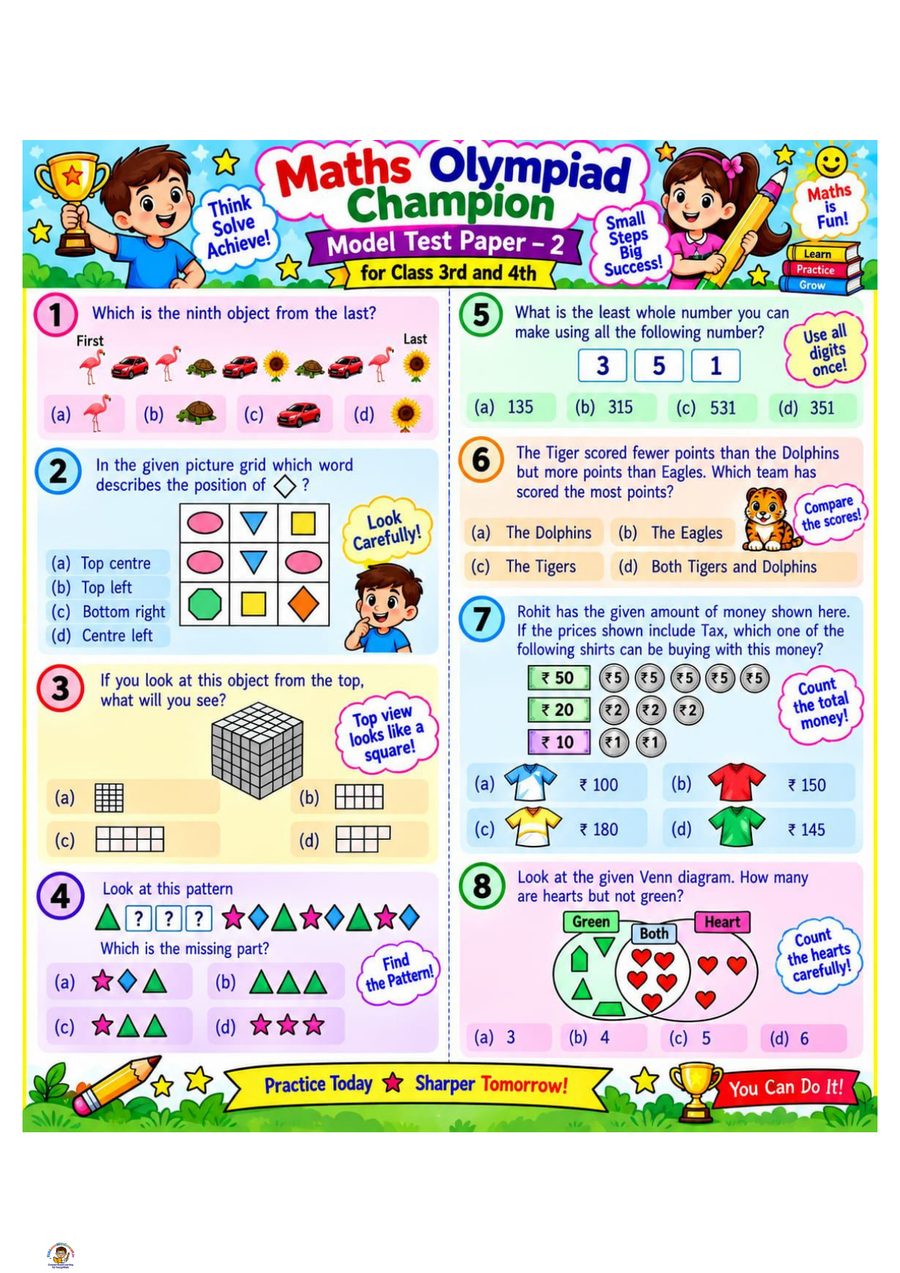
| 6 | Model test papers | Full paper, one sitting, timed. Then mark it together and rework only the wrong ones. |
How to use hints and solutions properly
A worked solution is the most useful page in any olympiad book and the easiest one to waste. The rule in our house is simple:
The three-attempt rule
- Attempt once with nothing in front of you but the question.
- Then read the hint only — one line, no more — and attempt it again.
- Only then read the full solution, and after reading it, close the book and redo the question from a blank page.
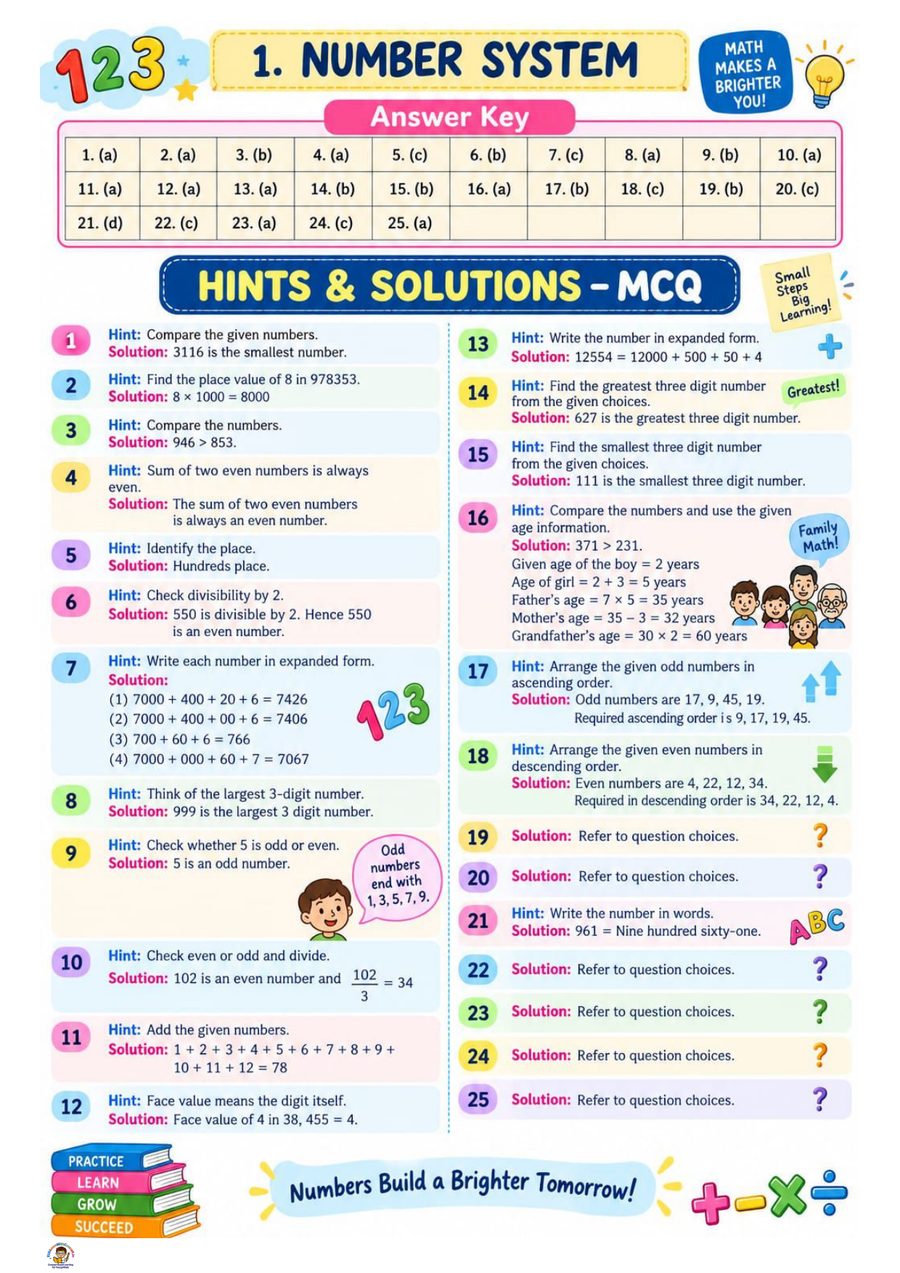
Step three is the one everybody skips, and it is the one that makes the method stick. A child who has read a solution knows it; a child who has rewritten it from memory can use it.
Mistakes that cost marks in the exam hall
Worth drilling before the paper
- Not reading all four options. Option (a) is often a near-miss placed there on purpose.
- Missing the units. The answer is 3 litres 200 ml, not 3200 — or the other way round. Read what the question asks for.
- Spending four minutes on question 6. Mark it, move on, come back. Every question carries the same marks in the main section.
- Working only in the head on multi-step problems. Two lines of rough work prevents most errors.
- Leaving blanks where there is no negative marking. Eliminate two options and choose.
One question for parents
Olympiads are useful when they make a child curious and harmful when they make a child anxious. The measure is simple: after a practice set, does your child want to know why the answer was what it was? If yes, keep going. If the only feeling in the room is relief that it is over, slow down, go back to concept notes for a week, and let the practice wait. The maths will keep.
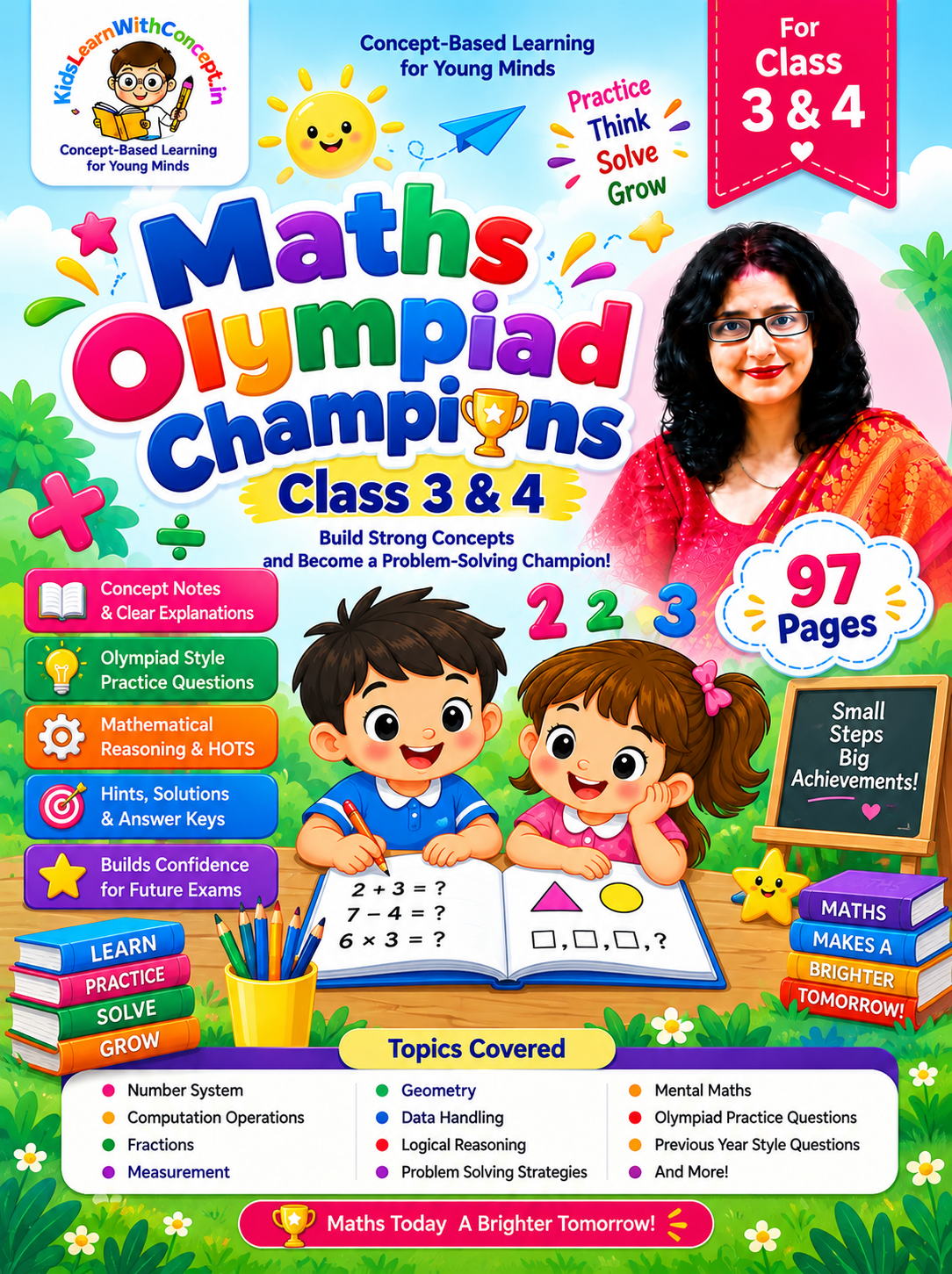
Maths Olympiad Champions — Class 3 & 4
97 pages built exactly along the path above: concept notes first, olympiad-style practice second, hints and solutions third, model papers last.
- Clear concept notes with learning objectives at the start of every chapter.
- Olympiad-style practice — multiple choice, Achievers (HOTS) sections and real-life word problems.
- Hints & Solutions for every question, showing the step and not just the result.
- Sample papers in the SOF International Mathematics Olympiad style, plus two full model test papers with answer keys.
Instant download · Print at home and reuse forever · Written by educator Vandana Kumari (M.Sc, LL.B). A Class 1 & 2 edition is also available.