 Kids Learn With Concept
Of all the small words in English, these three cause the most trouble in UKG and Class 1 — and they need not. There is only one idea to learn, it takes about four minutes to explain, and then it takes a few weeks of saying it aloud before it sticks. Here is the whole thing.
The rule
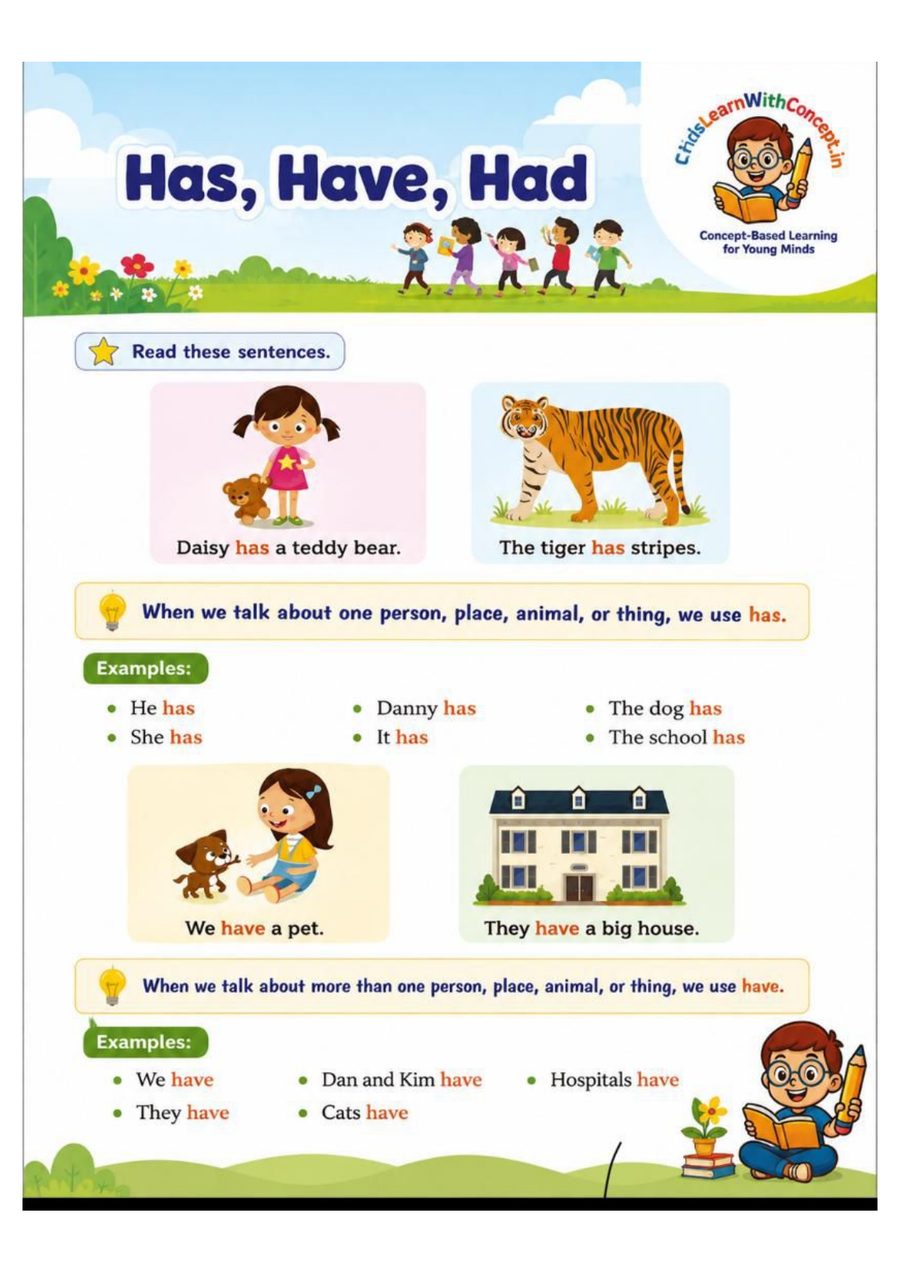
⭐ Use has when you are talking about one person, place, animal or thing.
- He has
- She has
- It has
- Danny has
- The dog has
- The school has
⭐ Use have when you are talking about more than one — and also with I, you, we and they.
- We have
- They have
- I have
- You have
- Dan and Kim have
- Cats have
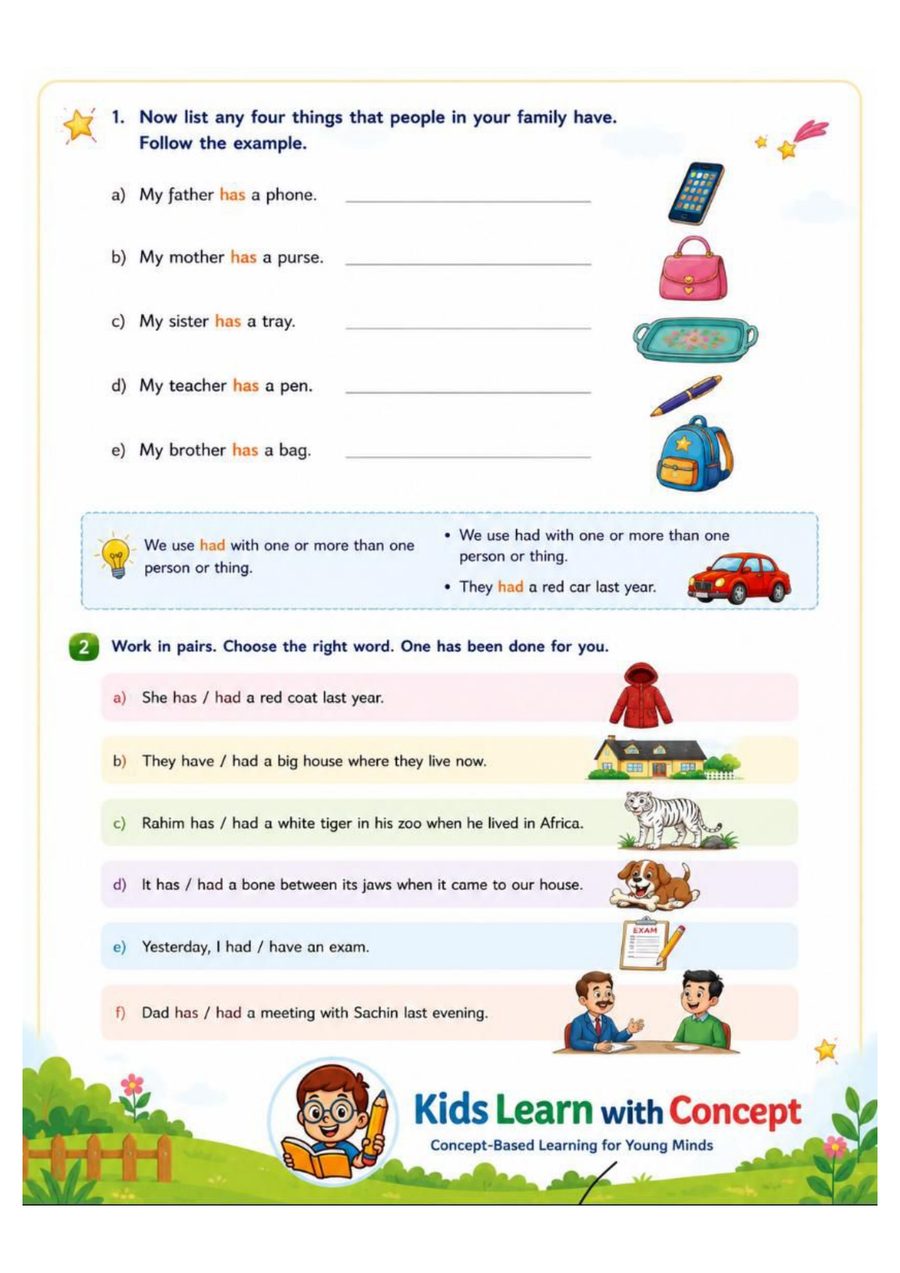
⭐ Use had when you are talking about the past — and had works for everyone, one or many, no exceptions.
That last line is the happy part of this lesson. She had, they had, I had, the dog had — all correct. Once a child is talking about yesterday, the choice disappears.

The one thing that confuses children
It is you. Everything else lines up with what a child already feels — one thing takes has, many things take have. But you is one person standing in front of them, and it still takes have. So do I and we.
Do not try to justify it. Teach those three as a little group that travels together:
⭐ I, you, we, they — these four always take have. Learn them as one chant and the rest of the rule works.
Four mistakes, and what to say
| What the child says | What is happening | What to say back |
|---|---|---|
| “She have a pencil.” | Most common of all — have has become the default word | “One person? Then has. She has a pencil.” |
| “You has a bag.” | The I, you, we, they group has not stuck yet | Say the chant, then the sentence |
| “They has cats.” | Counting they as one word instead of many people | “How many people is they? More than one. So have.” |
| “Yesterday I have an exam.” | The past has not been marked | “Yesterday is finished, so had.” |
Notice that every correction above is a question before it is a fix. “One or more than one?” asked a hundred times over a month does more than a hundred corrections, because the child ends up asking it themselves.
Moving to had
Teach had last, and teach it with a time word in front of it every single time — yesterday, last year, when he was small, last evening. The time word is what tells the child which word to reach for, and after a few weeks they stop needing it.
A five-minute game that works
Around the room
- Point at one thing. The child makes a sentence with has: “The clock has two hands.”
- Point at two or more things. The child uses have: “The chairs have four legs.”
- Point at yourself, then at both of you. That is I have and we have.
- Now say “yesterday” before each one. Everything becomes had.
Five minutes, no book, no writing. Do it while dinner is cooking.
For grown-ups
has → he, she, it, and any one person, place, animal or thing.
have → I, you, we, they, and any group of more than one.
had → everybody, for anything already finished.
Concept of Has, Have, Had — with Worksheet
The lesson above as a printable PDF: the rule in pictures, then the practice pages and the pair-work exercise, ready to print for home or a classroom.
- The concept first, in pictures a UKG child can read without help.
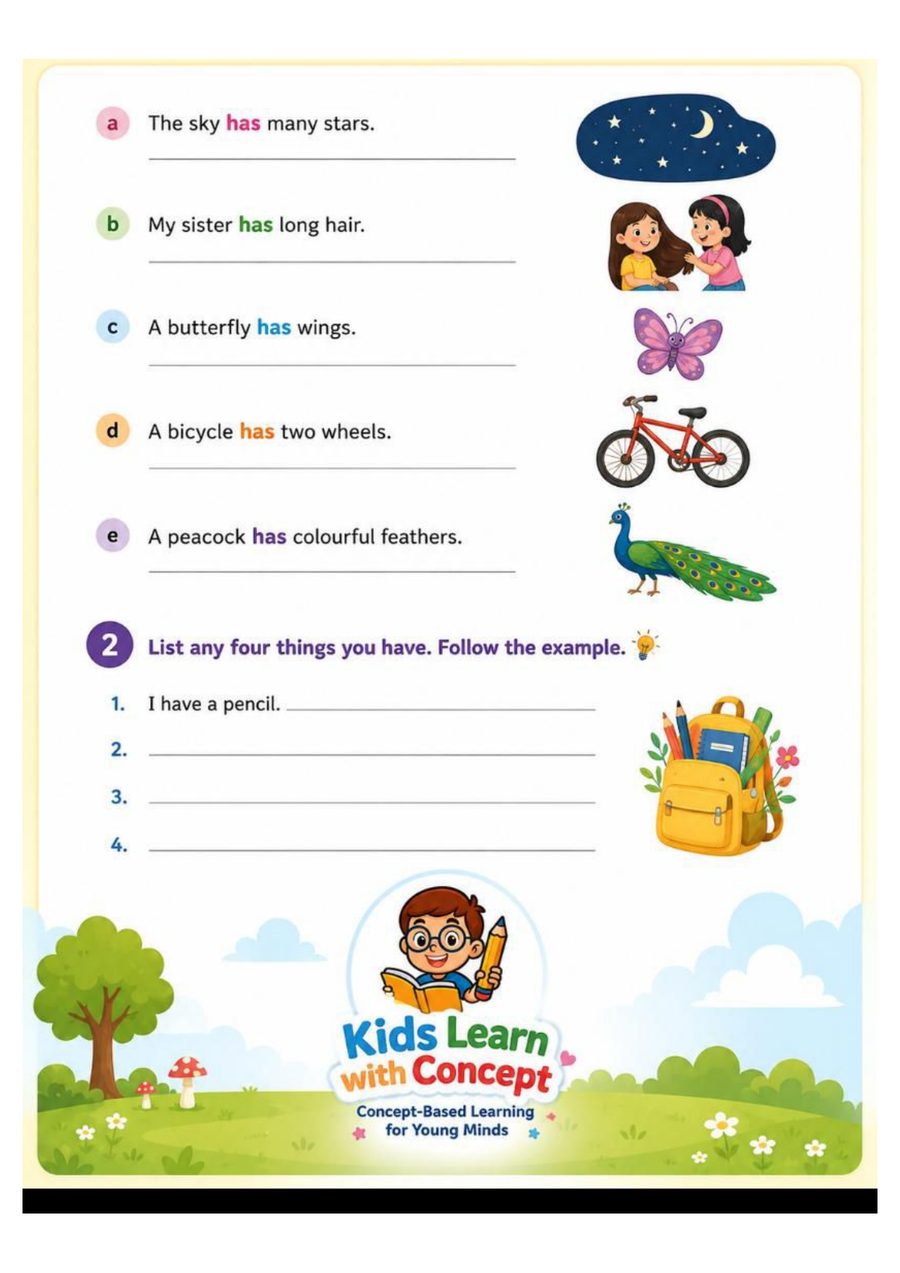
- Practice that asks for the child’s own sentences, not just blanks to fill.
- Has / had pair work, so the past is taught rather than assumed.
Instant download · Print at home and reuse forever · Written by educator Vandana Kumari (M.Sc, LL.B).