 Kids Learn With Concept
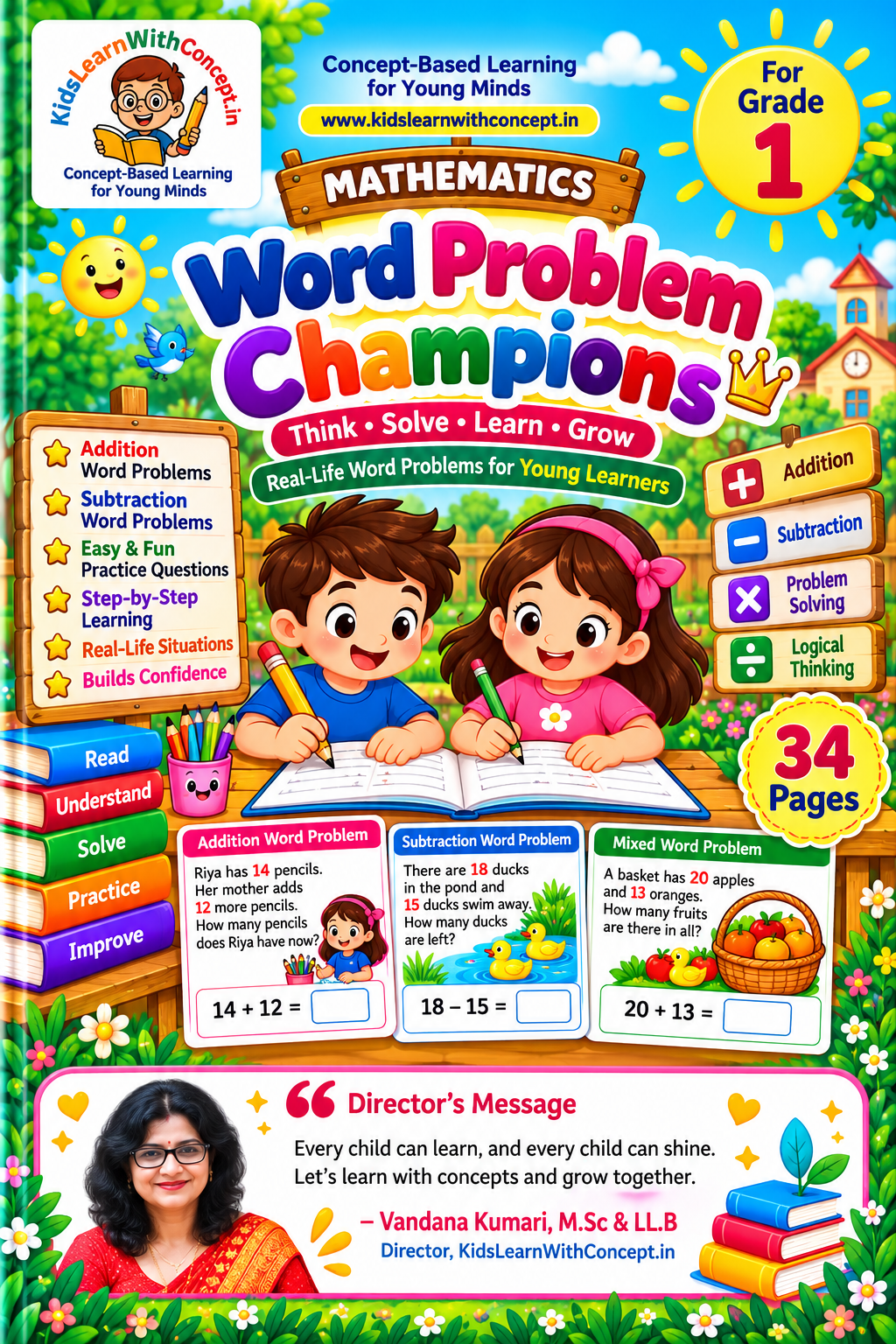
A child who can do 8 + 5 in two seconds will sit and stare at “Mia has 23 stickers. Her mother adds 12 more. How many stickers does Mia have now?” Parents usually read this as a maths problem and give more sums. It is not a maths problem. The child cannot see which sum to do, and that is a language skill nobody has taught them yet.
The key words are the whole lesson
Every word problem contains a word that tells you what to do. Teach the words, not the problems.
English has a small, fixed set of words that signal addition, and another that signals taking away. A Grade 1 child who can spot them has solved the hard part of every word problem they will meet this year — and the set is short enough to learn in a week.
| These mean add | These mean take away |
|---|---|
| add, and, together, in all, both, more, altogether, total, sum, combined | take away, lose, less, give away, spent, fewer, left, remain |
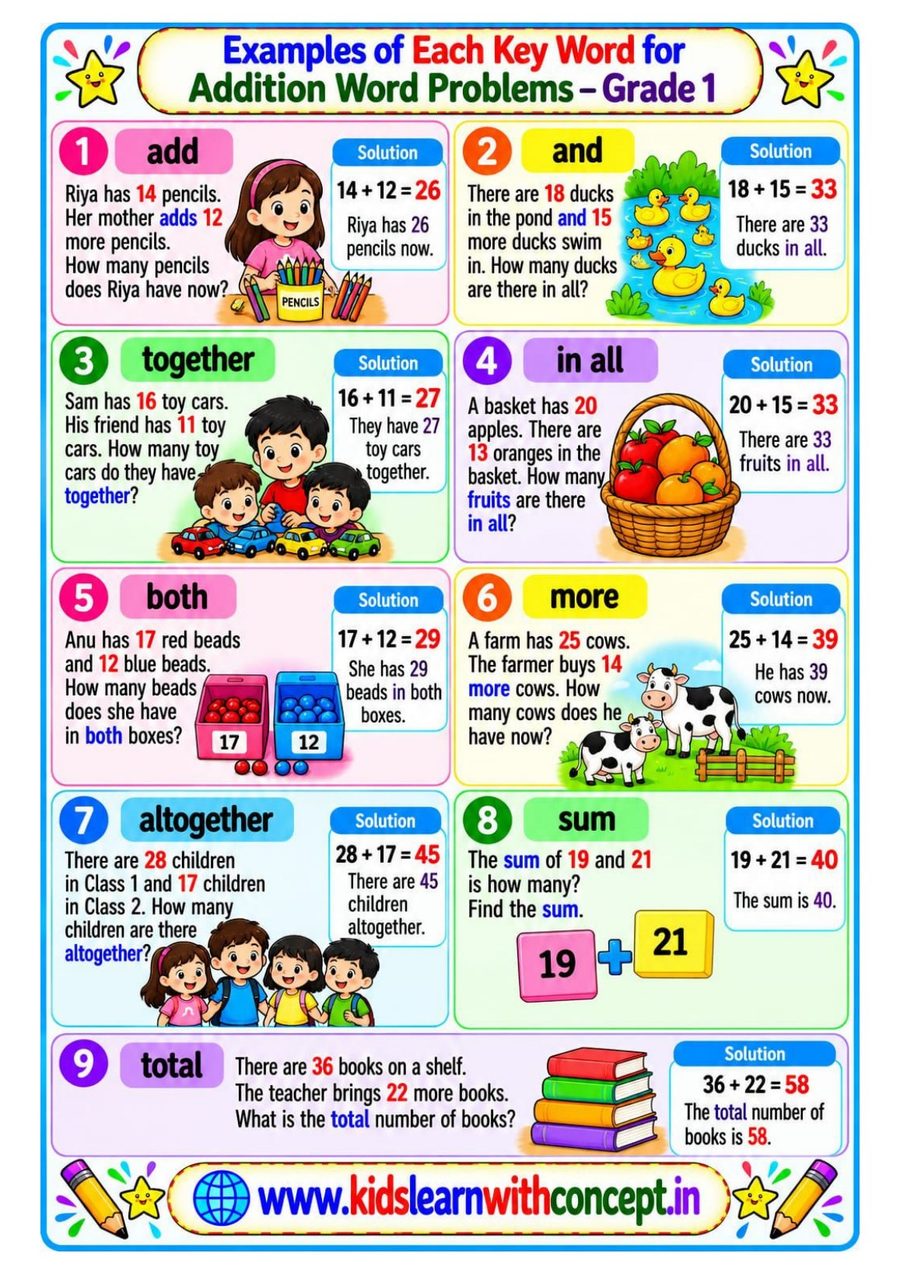
The order matters. Teaching the word altogether with one problem attached to it is far more useful than teaching ten problems and hoping the child notices what they have in common. The first is a rule; the second is a guess.
Read it, draw it, solve it
| Step | What the child does | Why |
|---|---|---|
| Read | Read the whole problem out loud, twice. | The second reading is where the numbers land. The first is just decoding. |
| Find | Circle the key word. | Decides add or subtract before any number is touched. |
| Draw | Draw the two amounts — sticks, circles, anything. | Turns a sentence into a picture, which a six-year-old can reason about. |
| Solve | Write the sum in the T | O box and work it out. | Keeps tens under tens. Stops the carrying mistakes. |
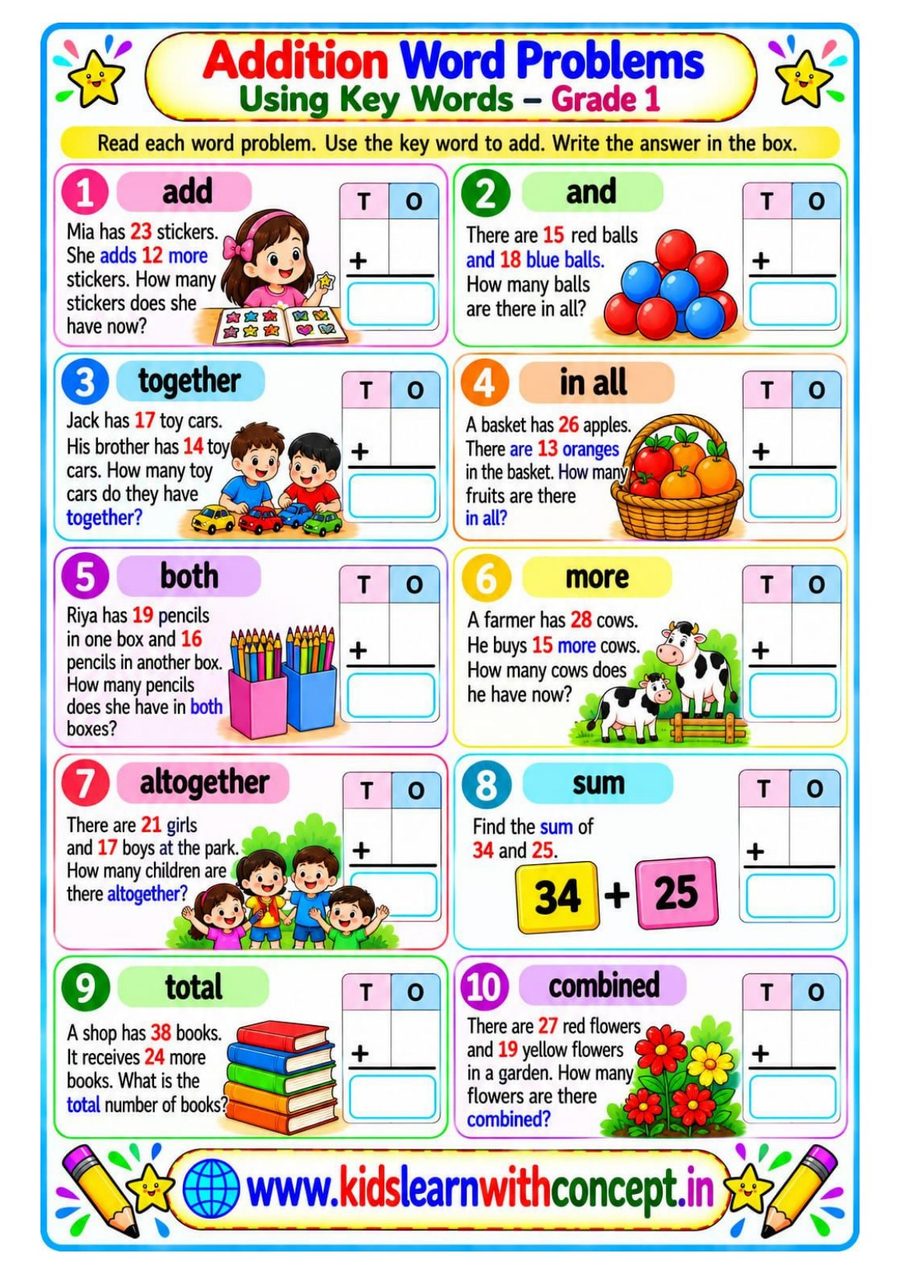
If the child can tell you the answer but cannot show the sum, they guessed. Ask for the box.
Subtraction is harder, and not for the reason you think
Children find subtraction word problems harder than addition ones, but rarely because the arithmetic is harder. It is because the key words are less obvious. Add and total are clearly about putting things together; spent, left and remain describe a result, not an action, and a child has to work backwards from the result to the sum.
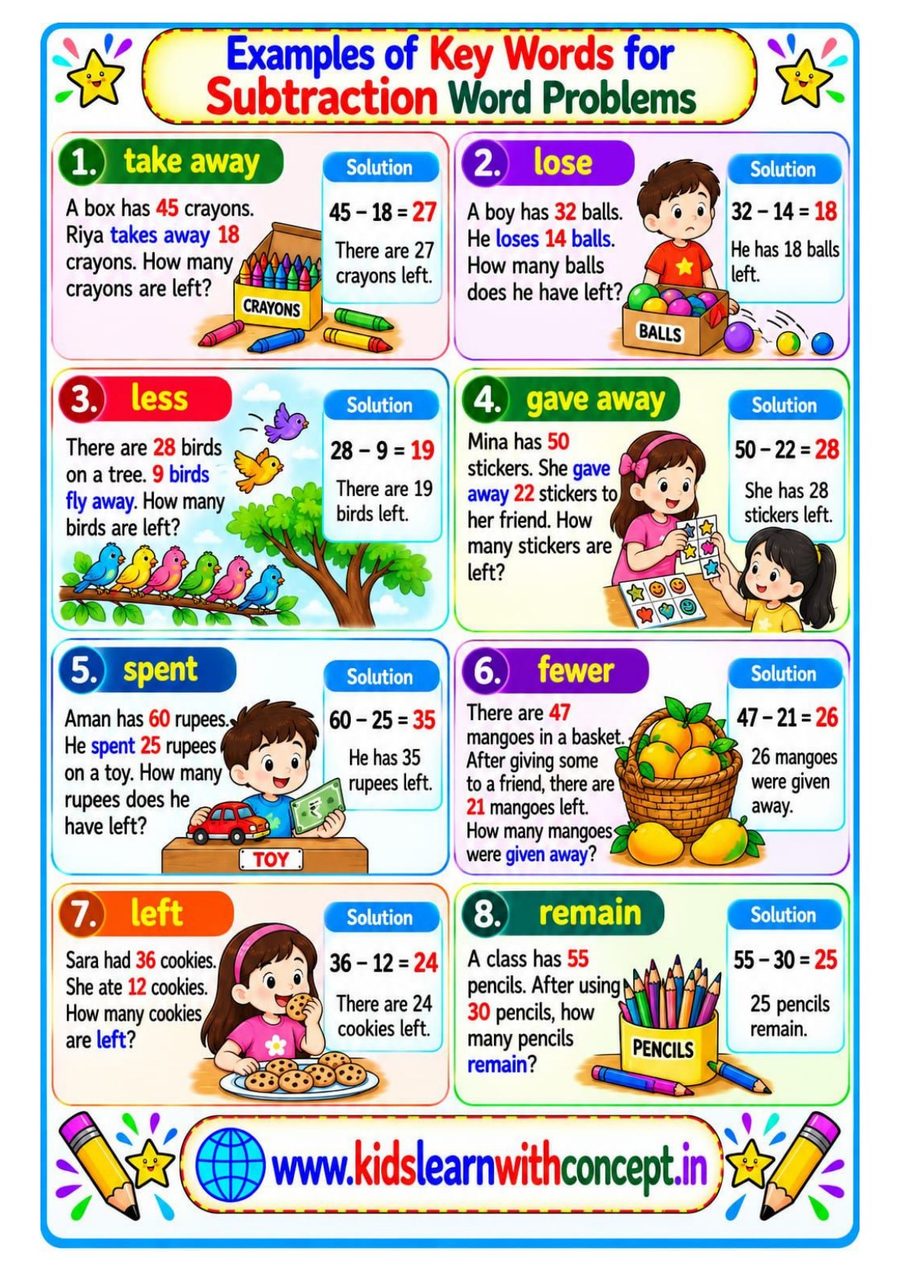
So subtraction gets its own key-word page and its own fifteen problems, taught after addition is secure rather than mixed in with it. Mixing them early is the fastest way to produce a child who adds everything.
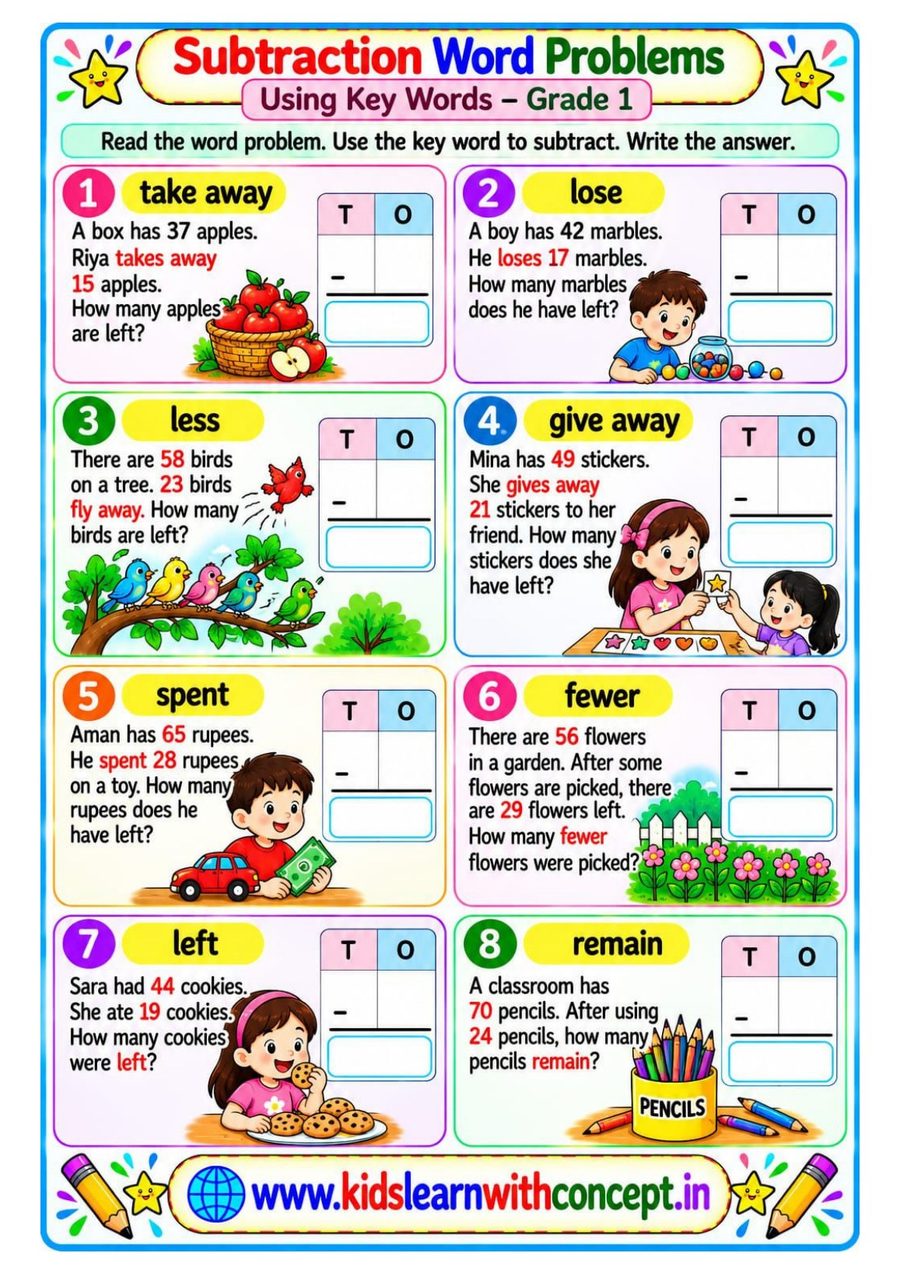
Is it a maths problem or a reading problem?
Worth knowing, because the fix is completely different. Read the problem aloud to the child and watch:
| What happens | What it means |
|---|---|
| They solve it immediately once they hear it | A reading problem. Keep doing word problems, but read them aloud for a few weeks. The maths is fine. |
| They still cannot tell you whether to add or take away | A key-word problem. Go back to the two key-word pages. |
| They know it is 23 + 12 but get the wrong answer | A maths problem — and the only one of the three that more sums will fix. |
Try two pages free. An addition page and a subtraction page from this book are in the free Worksheets section, under Maths › Word Problems — Grade 1.
A word about the pictures
Every problem in the book has a picture of what it is talking about — the stickers, the apples, the marbles. This is not decoration. A six-year-old reading “23 stickers” has to hold a quantity in their head that they cannot see; a picture of stickers does that work for them and frees the child to think about the question instead. By Class 2 the pictures should start disappearing, and in this book they already begin to.