 Kids Learn With Concept
A Class 6 child writes 4,52,310 and reads it “four million fifty-two thousand three hundred and ten”. The digits are right. The commas are right. The reading is wrong, and it will be wrong on every large-number question for the rest of the year. This is one of the few topics where a single misunderstanding does quiet, continuous damage — because nothing looks broken.
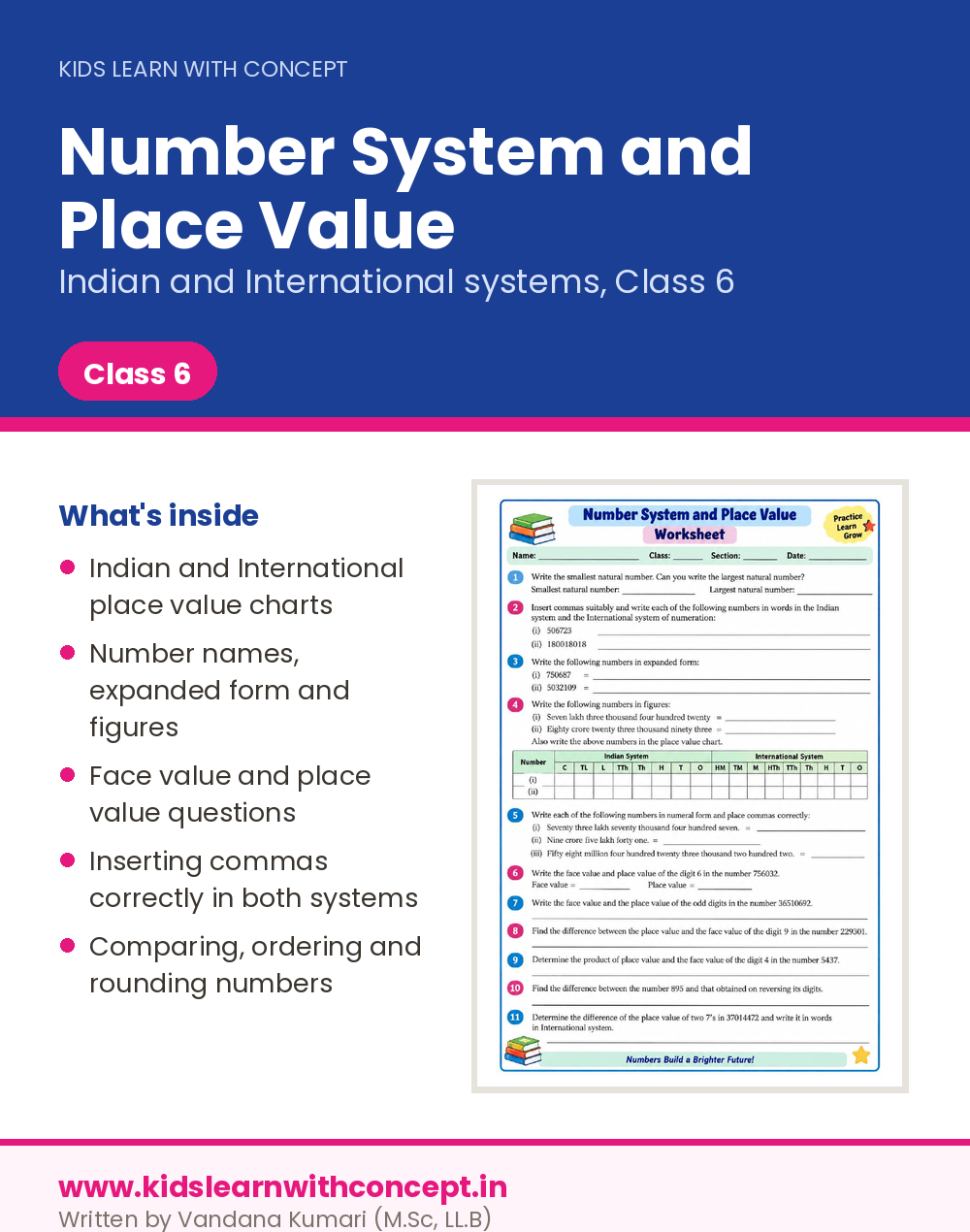
The two systems, side by side
The digits never change. Only where you put the commas, and therefore what you call the groups.
| Indian system | International system | |
|---|---|---|
| Grouping | 3 digits, then 2 at a time | 3 at a time, all the way |
| Periods | Ones, Thousands, Lakhs, Crores | Ones, Thousands, Millions, Billions |
| Example | 4,52,310 | 452,310 |
| Read as | Four lakh fifty-two thousand three hundred ten | Four hundred fifty-two thousand three hundred ten |
Notice what the example shows: the same number, written two correct ways. That is the point children miss. They are not two different numbers and not two difficulties — they are two conventions, and the only real skill is keeping them apart.
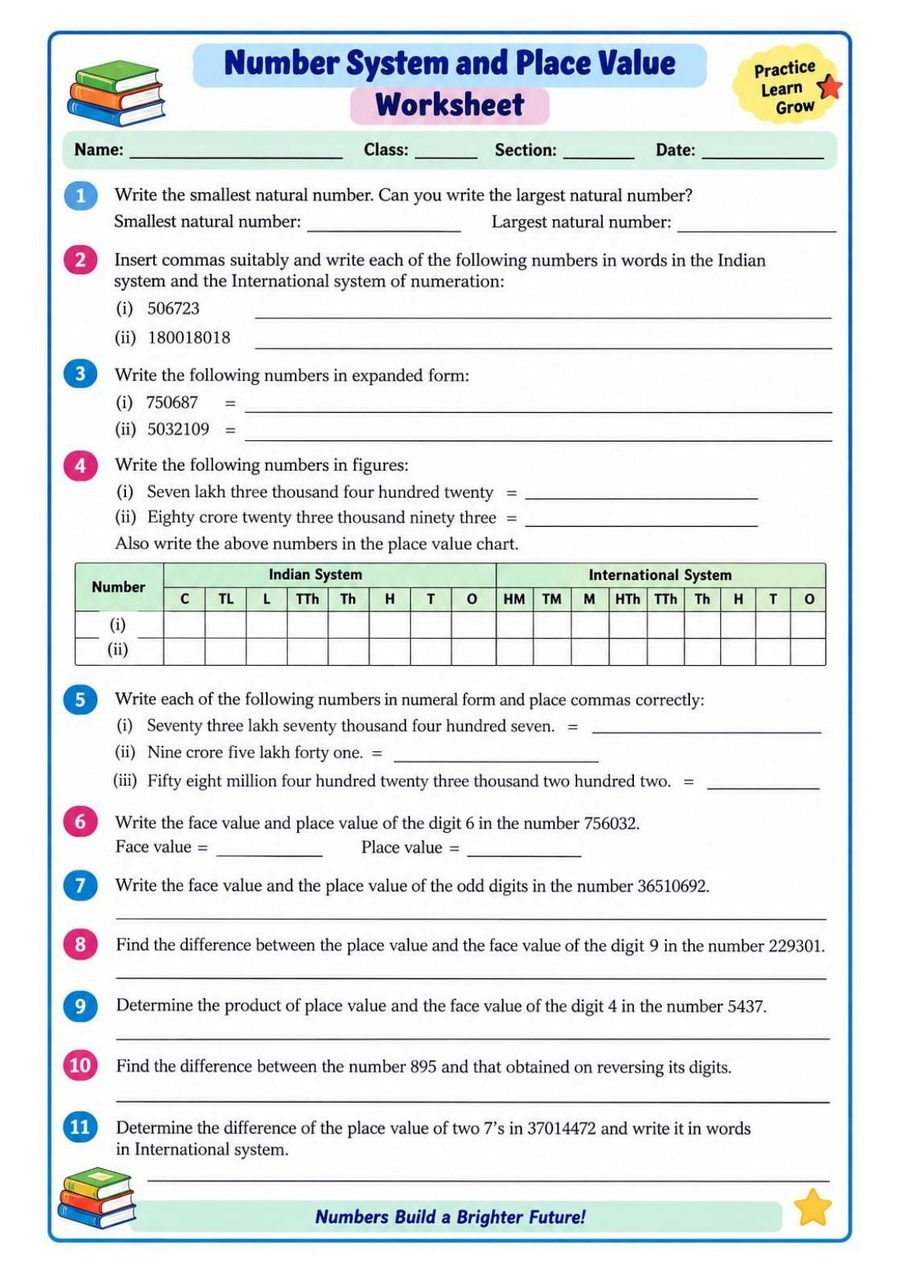
Where it actually goes wrong
Almost always in the same place. The child puts the commas in the Indian positions, because that is what they see on price tags and in newspapers, and then reads the groups using International names, because that is what they hear in English. The result is a number that is ten or a hundred times out, with no visible error to point at.
Decide which system you are in before you place a single comma. Then stay in it.
| Place value, Indian | Place value, International |
|---|---|
| Crore, Ten lakh, Lakh, Ten thousand, Thousand, Hundred, Ten, One | Ten million, Million, Hundred thousand, Ten thousand, Thousand, Hundred, Ten, One |
Worth learning out loud, in order, both ways. Ninety seconds a day for a week and the problem disappears for good.
Face value and place value
Two words that sound like synonyms and are not. In 5,437:
| Digit | Face value | Place value |
|---|---|---|
| 4 | 4 — what the digit is | 400 — what it is worth here |
| 3 | 3 | 30 |
| 0 (in 5,037) | 0 | 0 — the one digit where they are always equal |
Exam questions almost always ask for the difference between the two (400 − 4 = 396), or for the difference between the place values of two identical digits in one number. Both are easy once the child can say which is which without pausing.
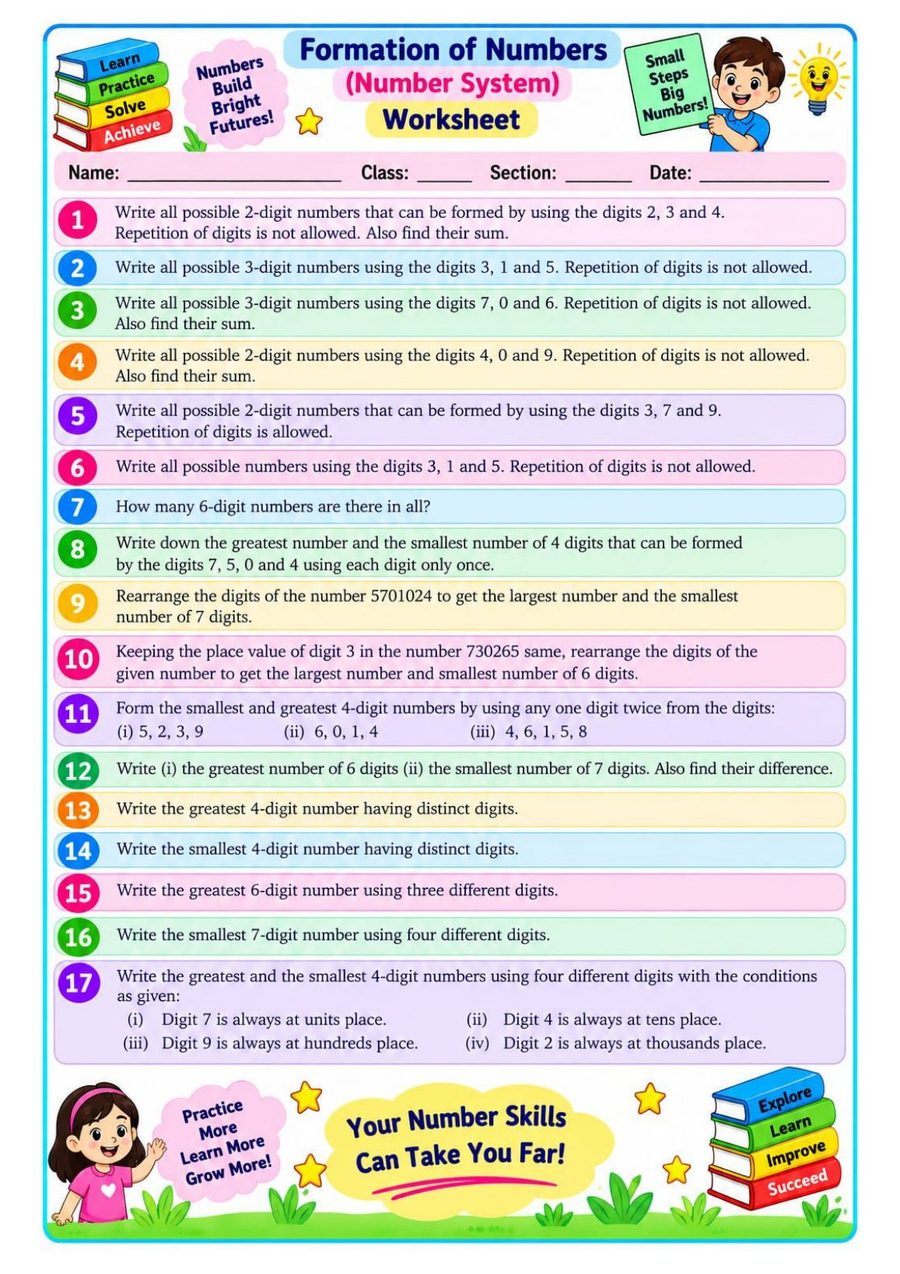
Greatest and smallest, and the trap in it
To make the greatest number, put the digits in descending order. To make the smallest, ascending — except that a number cannot begin with 0. With the digits 4, 0, 7, 1 the smallest is 1047, not 0147. That exception catches almost everyone the first time, which is exactly why it is asked.
Expanded form
Expanded form is where place value proves it has been understood, because the child has to produce the values rather than recognise them:
5,437 = 5000 + 400 + 30 + 7, or (5 × 1000) + (4 × 100) + (3 × 10) + (7 × 1)
Both forms are correct and both are asked. The second is the more useful one to insist on, because it names the place as well as the value, and it is the form that survives into algebra.
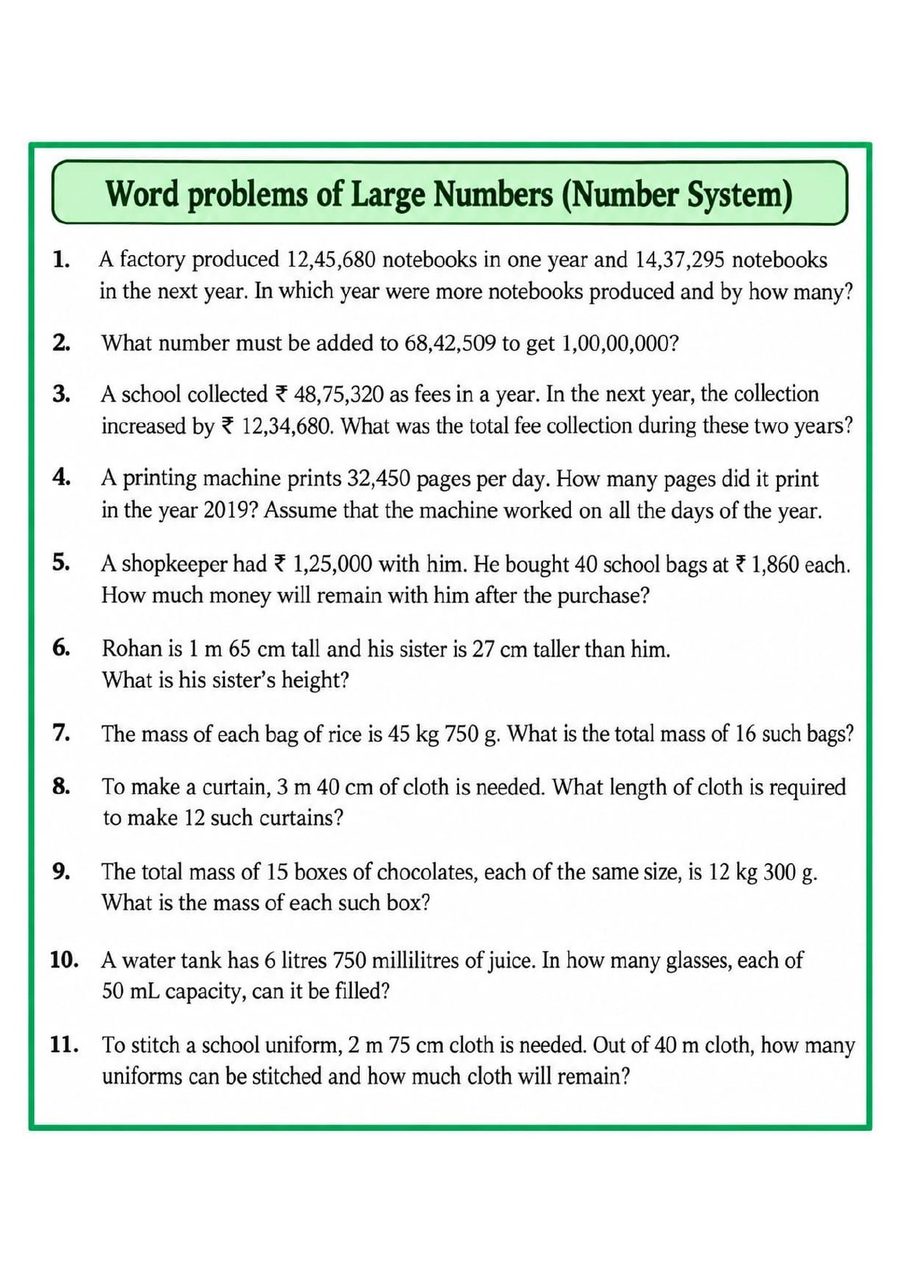
Try two pages free. A place value page and a word problems page are in the free Worksheets section, under Maths › Class 6.
A five-minute check
Write any seven-digit number on a scrap of paper and ask for four things: put the commas in the Indian system, read it aloud, put the commas in the International system, read it aloud again. A child who can do all four without hesitating has this topic. One who hesitates on the third has the comma problem described at the top, and ninety seconds of the place value chart each day for a week will fix it.